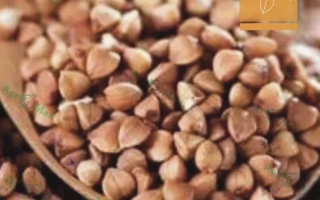
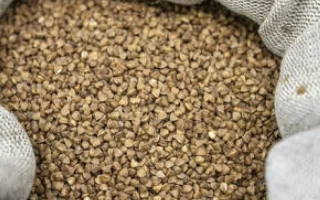
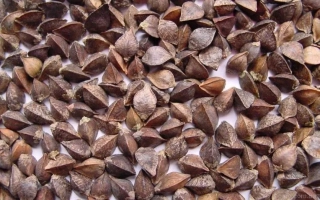
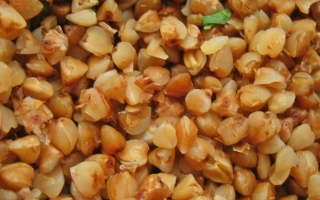
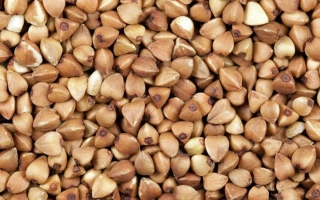
The buckwheat variety Medova is a valuable annual crop that combines the characteristics of a high-yielding honey plant, green manure, and grain crop. This variety is distinguished by its high sugar content in seeds, which ensures abundant and aromatic honey harvests, as well as high nectar productivity — up to 120-130 kg of honey per hectare. The honey obtained from Medova buckwheat is dark, rich in minerals, and has a pleasant aroma. The plant begins flowering 30-35 days after sowing, with an overall flowering period of about 25-30 days, which contributes to a prolonged and stable honey harvest. Medova buckwheat grows quickly and has a vegetative period of 70 to 85 days. The plants are upright, determinate, reaching a height of 80 to 130 cm, with a 1000-seed weight of 28-32 g. The variety is resistant to diseases and adapted to various climatic conditions, including heavy and depleted soils. Thanks to its well-developed root system, buckwheat penetrates the soil deeply (0.8-1.5 m), contributing to soil loosening and improved aeration. After decomposition, roots and above-ground parts enrich the soil with organic matter, phosphorus, potassium, and nitrogen, making buckwheat an excellent green manure and cover crop. Sowing of Medova buckwheat is recommended at a rate of 6-7 kg per 10 ares. The plant rapidly develops green mass, effectively suppresses weeds, and improves soil structure without drying it out, which is especially important when planting under fruit trees and shrubs. Medova buckwheat is characterized by low water consumption and high yield — in Ukraine, the average yield is 20-30 centners per hectare, and under optimal conditions, it can reach up to 36.3 centners per hectare. This variety is a universal solution for obtaining quality grain, improving soil fertility, and ensuring a stable honey harvest.