
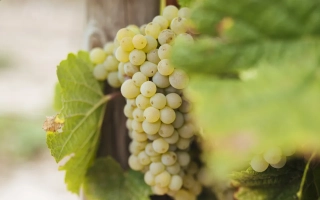


SKU #62047
·
42 views
Sauvignon Blanc
Grape
Yubileynaya Agrofirm LLCUser rating
0 votes0% positive reviews
No ratings yet — be the first.
Usage Group
Technical
Ripening Period
Medium
Cold Resistance
Average (up to -21°C)
Resistance to Mildew
Average
Prices in stores
from2.03 €per seedling
pack from 2.03 € per 1 pcs
5 offers from 4 stores
Store offers · 5 from 4 stores
Prices are updated on loadLoading offers…
Available at: Agro-market · Добродар · Saduua · Sezon
Aggregator catalog: prices are collected automatically from store websites, normalized by AI and converted at the current exchange rate. Before ordering, confirm the price and availability on the store's website. This block is not indexed by search engines — the data is loaded after the page opens.
About product

A vigorous technical grape variety ideal for crafting balanced white wines with consistent quality standards.
Usage Group
Technical
Ripening Period
Medium
Cold Resistance
Average (up to -21°C)
Resistance to Mildew
Average
Description
"Sauvignon" by Agro-firm Yubileynaya: A Technical Grape Variety Overview
The "Sauvignon" variety, developed and produced by Agro-firm Yubileynaya, stands as a specialized technical grape cultivar designed for consistent wine production. Characterized by its specific agronomic profile, this variety plays a crucial role for vineyards aiming to maintain a traditional, high-quality white wine portfolio.
Agronomic Traits and Growth Habits
The cultivar is marked by vigorous bush growth, which necessitates disciplined canopy management, pruning, and green operations to ensure proper air circulation and sunlight exposure. With a medium ripening period, the vines produce white berries ranging from 2 to 5 grams, clustered in medium-sized bunches (300–500 g). The yield is rated as moderate, emphasizing quality over raw quantity, which is a desirable trait for concentrated wine production.
Disease Resistance and Cultivation Challenges
Managing the "Sauvignon" variety requires a robust phytosanitary strategy. While it displays moderate resistance to downy mildew (mildew), it exhibits low resistance to oidium and gray rot. Consequently, a systematic approach to chemical or biological protection is essential for ensuring fruit health throughout the growing season. This variety is best suited for professional environments where rigorous disease monitoring is possible.
Climate Suitability
With a frost resistance threshold of approximately -21°C, this variety is adapted for moderate winter conditions. In regions where temperatures fall below this limit, winter protection is advised to maintain plant health. Agro-firm Yubileynaya offers this variety as a reliable option for growers who prioritize consistent, classic white wine profiles, provided that the required agricultural and protective standards are met.
Crop & resistance
Crop
Disease resistance
Specifications hover over for a hint about the specification
| Usage Group | |
|---|---|
|
Ripening Period
Ripening Period
It takes 70-100 days until pepper reaches flowering stage, 130-160 days until technical fruit ripeness, and 135-180 days until physiological ripeness. |
Medium |
| Cold Resistance | |
| Resistance to Mildew | |
| Resistance to oidium | |
| Resistance to Gray Mold | |
|
Yield
Yield
Overall bulb harvest per unit area. Depends on both onion variety characteristics and agronomic practices, fertilizers, and irrigation. Under optimal growing conditions, an onion yield of 100 tons per hectare and above is not considered record-breaking. |
Average, Low |
| Bush Growth Power | |
| Bunch Size | Medium (300–500 g) |
| Berry Size | Medium (2–5 g) |
| Berry Color | |
| Flavor | |
| Sugar Content | Average (16–20%) |
| Zoning | |
| Care Requirement | |
| Assignment | |
| Features | |
| Registration year | 2021 |
| Catalog | Catalog → Grape |
| Manufacturer | Yubileynaya Agrofirm LLC |
| Country | Russia |
Not yet комментариев. Be the first!
Alternatives
Grapevine saplings · similar varieties

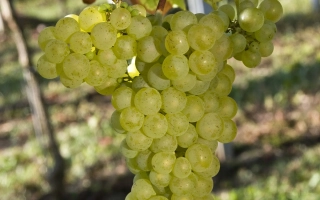


Rkatsiteli
ФГБОУ ВО Омский государственный аграрный университет имени П.А. Столыпина
057 6 offers
3.78 €per seedling ≈ 195 ₴



See also
Often considered together with this variety





Recently viewed
Products you’ve viewed on this site
Reviews · 0