


SKU #62053
·
43 views
ARTIN ZERVA
Grape
User rating
0 votes0% positive reviews
No ratings yet — be the first.
Ripening Period
Medium
Cold Resistance
Average (up to -21°C)
Resistance to Mildew
Average
Resistance to oidium
Low
Prices in stores
from7.12 €per seedling
pack from 2.89 € per pack
2 offers from 2 stores
Store offers · 2 from 2 stores
Prices are updated on loadLoading offers…
Available at: Doslidna Stantsiya · Сонцесад
Aggregator catalog: prices are collected automatically from store websites, normalized by AI and converted at the current exchange rate. Before ordering, confirm the price and availability on the store's website. This block is not indexed by search engines — the data is loaded after the page opens.
About product

Artin Zerva is a Crimean grape variety belonging to the eco-geographical group of the Black Sea basin. It ripens in mid-September, usually in the second decade of the month. Bushes are of medium height with medium growth vigor. Leaves are of medium size, rounded, five- or seven-lobed, deeply cut, with dense hairy-hirsute pubescence on the underside. Flowers are hermaphroditic, which promotes good…
Ripening Period
Medium
Cold Resistance
Average (up to -21°C)
Resistance to Mildew
Average
Resistance to oidium
Low
Description
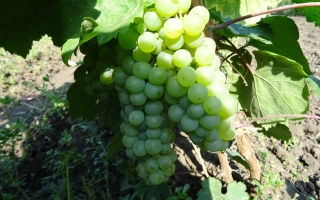
Artin Zerva is a Crimean grape variety belonging to the eco-geographical group of the Black Sea basin. It ripens in mid-September, usually in the second decade of the month. Bushes are of medium height with medium growth vigor. Leaves are of medium size, rounded, five- or seven-lobed, deeply cut, with dense hairy-hirsute pubescence on the underside. Flowers are hermaphroditic, which promotes good pollination and fruit set. Bunches are of medium size, cylindrical or cylindro-conical in shape, often winged, dense to medium-dense. Berries are of medium size, rounded, yellowish-green in color, covered with a dense waxy bloom. The berry skin is thick and tough, the pulp is juicy with a simple flavor. The juice is colorless, with sugar content ranging from 20-27 g/100 cm³ and titratable acidity of about 6-7 g/dm³. Medium-sized seeds are present in the berries. The tasting score of young winemaking material is about 7.6 points, with a straw color and weak aroma with green apple notes, and a taste of moderate fullness. The variety is used mainly for the production of ordinary table and dessert wines, often in a blend with other varieties. The yield of Artin Zerva is average or low, about 104 c/ha. The grapes are winter-hardy, enduring minimum temperatures down to -21°C. However, the variety is susceptible to fungal diseases: in particular, it is moderately affected by downy mildew, while powdery mildew and grey rot cause significant damage, especially in a wet autumn. The technological properties of the variety are studied insufficiently, which requires further research for optimizing winemaking use.
Crop & resistance
Crop
Disease resistance
Specifications hover over for a hint about the specification
|
Ripening Period
Ripening Period
It takes 70-100 days until pepper reaches flowering stage, 130-160 days until technical fruit ripeness, and 135-180 days until physiological ripeness. |
Medium |
|---|---|
| Cold Resistance | |
| Resistance to Mildew | |
| Resistance to oidium | |
| Resistance to Gray Mold | |
|
Yield
Yield
Overall bulb harvest per unit area. Depends on both onion variety characteristics and agronomic practices, fertilizers, and irrigation. Under optimal growing conditions, an onion yield of 100 tons per hectare and above is not considered record-breaking. |
Average |
| Bush Growth Power | |
| Flower Type | |
| Bunch Size | Medium (300–500 g) |
| Berry Size | Medium (2–5 g) |
| Sugar Content | High (>20%) |
| Care Requirement | |
| Assignment | |
| Registration year | 2021 |
| Catalog | Catalog → Grape |
| Legal data |
Show · 1 |
| Country | Russia |
Not yet комментариев. Be the first!
Alternatives
Grapevine saplings · similar varieties

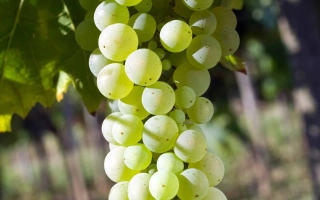

Rkatsiteli
ФГБОУ ВО Омский государственный аграрный университет имени П.А. Столыпина
057 6 offers
3.77 €per seedling ≈ 195 ₴


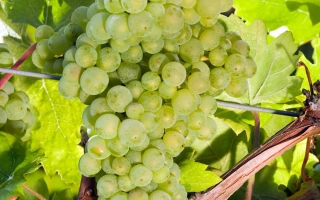


Saperavi
ФГБОУ ВО Омский государственный аграрный университет имени П.А. Столыпина
066 5 offers
3.77 €per seedling ≈ 195 ₴


See also
Often considered together with this variety





Recently viewed
Products you’ve viewed on this site
Reviews · 0