
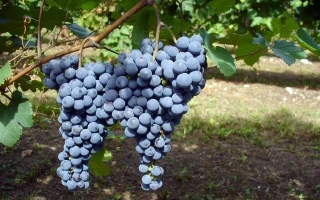


SKU #62270
·
31 views
CABERNET FRANC
Grape
SCFSCVVUser rating
0 votes0% positive reviews
No ratings yet — be the first.
Ripening Period
Mid-late
Yield
Average
Bush Growth Power
Strong
Bunch Size
Medium (300–500 g)
Prices in stores
from3.78 €per seedling
pack from 1.84 € per pack
6 offers from 6 stores
Store offers · 6 from 6 stores
Prices are updated on loadLoading offers…
Available at: Agro-market · Dflora · planta-hr · Райська Долина · Saduua · Sezon
Aggregator catalog: prices are collected automatically from store websites, normalized by AI and converted at the current exchange rate. Before ordering, confirm the price and availability on the store's website. This block is not indexed by search engines — the data is loaded after the page opens.
About product

A robust technical variety with high disease resistance and excellent aging potential.
Ripening Period
Mid-late
Yield
Average
Bush Growth Power
Strong
Bunch Size
Medium (300–500 g)
Description
Technical Profile and Agrobiological Parameters
The «Cabernet Franc» variety from SKFNTSSVV is a classic technical cultivar, specifically adapted for wine production. The research center focused on selecting clones with high resistance to major fungal pathogens, particularly downy mildew and powdery mildew. This breeding strategy effectively reduces the pesticide load on vineyards, allowing for more sustainable agricultural practices while maintaining yields.
Bush Morphology and Yield Development
- Vigor: The vine is characterized by strong growth, necessitating a well-designed trellis system and regular pruning. A robust vegetative structure ensures healthy sap flow and proper vine maturation before dormancy.
- Clusters: With an average cluster weight of 300–500 g, the variety maintains an optimal sugar-to-acid ratio. The moderate cluster density helps mitigate the risk of botrytis, ensuring high-quality harvest consistency.
- Ripening: Classified as mid-to-late season. The genetic profile of this variety requires stable accumulation of active temperatures, which is essential for developing phenolic maturity in the skins—a prerequisite for high-end, age-worthy wines.
Winemaking Utility
This SKFNTSSVV-selected variety provides a solid foundation for producing wines with firm tannin structure and the characteristic aromatic profile (often noted for vegetal and dark berry notes) synonymous with the variety. The medium yield ensures high juice extractivity, making it an excellent choice for wines intended for long-term maturation. Under proper management, the variety proves highly capable of expressing distinct terroir characteristics, validated by its application in modern professional viticulture.
Video · 10 videos
Suggest a video →Crop & resistance
Crop
Disease resistance
Specifications hover over for a hint about the specification
|
Ripening Period
Ripening Period
It takes 70-100 days until pepper reaches flowering stage, 130-160 days until technical fruit ripeness, and 135-180 days until physiological ripeness. |
Mid-late |
|---|---|
|
Yield
Yield
Overall bulb harvest per unit area. Depends on both onion variety characteristics and agronomic practices, fertilizers, and irrigation. Under optimal growing conditions, an onion yield of 100 tons per hectare and above is not considered record-breaking. |
Average |
| Bush Growth Power | |
| Bunch Size | Medium (300–500 g) |
| Berry Color | |
| Assignment | |
| Registration year | 2009 |
| Catalog | Catalog → Grape |
| Manufacturer | SCFSCVV |
| Legal data | |
| Country | Russia |
Not yet комментариев. Be the first!
Alternatives
Grapevine saplings · similar varieties





ROSHFOR K
Фгбоу Во Кубанский Государственный Аграрный Университет Имени И.Т.Трубилина
048 7 offers
3.78 €per seedling ≈ 195 ₴


See also
Often considered together with this variety


Recently viewed
Products you’ve viewed on this site
Reviews · 0