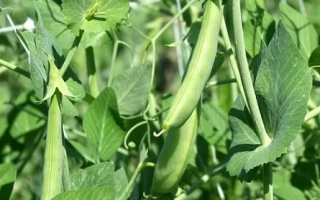
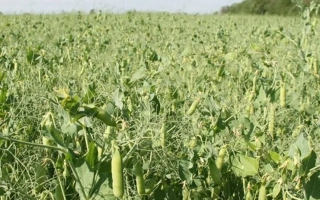
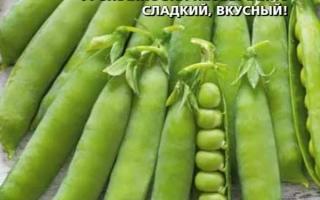
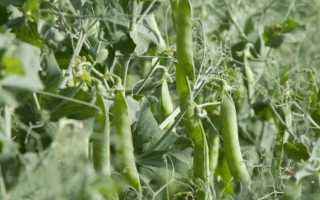
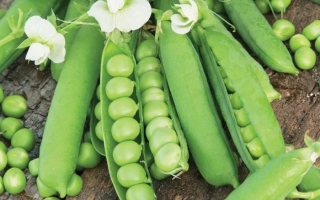
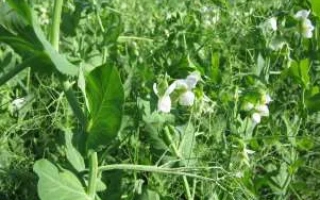
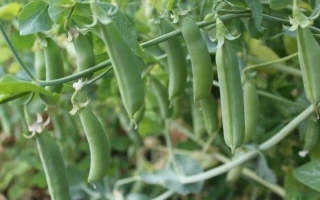
Pea variety 'Krasnoufimsky 93' is a mid-early, leafless, and non-shattering variety created at the Krasnoufimskaya Selection Station. The vegetation period is about 69-81 days, allowing its use in various climatic conditions. Plants reach a height of 75-99 cm, with well-developed stipules and slightly curved pods without anthocyanin coloring. Seeds are angular-rounded, brown in color, with yellow cotyledons; the mass of 1000 seeds varies from 60 to 217 g depending on growing conditions.
The variety is characterized by high resistance to shattering and medium resistance to lodging, as well as enhanced drought resistance and tolerance to waterlogging. It is moderately resistant to ascochitosis and root rots, making it a reliable choice for cultivation in various regions, including the Volga-Vyatka, North Caucasian, Ural, and West Siberian regions. It is recommended for growing in Nizhny Novgorod and Orenburg oblasts, Altai, Krasnodar, and Perm krais, as well as in the Republics of Bashkortostan and Udmurtia.
Krasnoufimsky 93 is distinguished by high yield: average indicators vary from 18.4 to 27.1 c/ha depending on the region, with a maximum seed yield of up to 38.2 c/ha and dry matter up to 140.1 c/ha. Protein content in the grain reaches 20-25.5%, making this variety valuable for fodder and grain use. Agronomy of cultivation corresponds to generally accepted methods for peas, facilitating its introduction into agricultural practices.