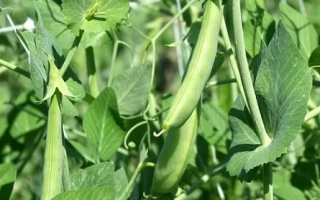
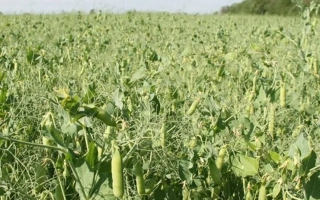
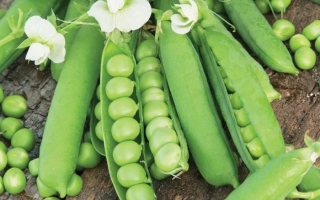
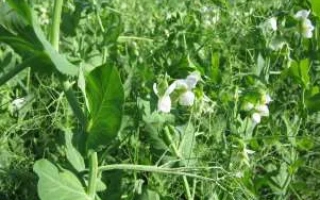
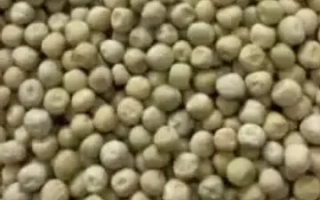
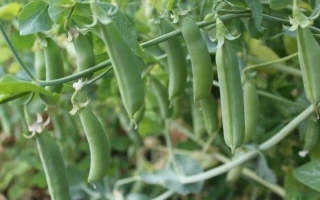
Pea cultivar Argon is a mid-season variety with a vegetation period ranging from 74 to 90 days. The plants reach a height of 49 to 79 cm, featuring a short stem with 17-20 internodes and 2-3 pairs of medium-sized leaflets. Inflorescences consist of two- or three-flowered racemes with white flowers. Pods contain 4-6 seeds, which are spherical in shape with a smooth surface and yellow cotyledons. The mass of 1000 seeds varies from 214 to 286 g, with a protein content reaching 27.8%. The variety exhibits resistance to lodging, shattering, and drought, as well as resistance to ascochitis and powdery mildew. Argon demonstrates high yield, averaging 21.8 c/ha in the North Caucasus region and reaching a maximum of 45.9 c/ha in the Stavropol region. In the Krasnodar region, the yield of the variety exceeds that of the new variety Orlovchanin 2 by 2.0 c/ha. However, pea is susceptible to damage from moth and weevil, which requires mandatory application of insecticidal treatments and seed fumigation to protect the crop. Argon variety is suitable for cultivation in various climatic conditions of the region, prefers fertile soils, and sunny plots. Due to its characteristics, pea is widely used in agriculture to obtain high-quality and high-protein yield. Its seeds have good germination and are suitable for sowing in optimal timing, ensuring stable and efficient production.