



Prices in stores
No offers yet — stores have not added prices for this product yet.
Similar varieties with prices
-
AcademicGeterozisnaya Selektsiya
from 3.67 €
-
 SIR 10
from 0.36 €
SIR 10
from 0.36 €
-
 Sofiyivsky
from 2.67 €
Sofiyivsky
from 2.67 €
-
 Kharkiv Purple
from 2.63 €
Kharkiv Purple
from 2.63 €
Type
Winter
Features
Bolting
Number of cloves in the head
4-6
Average head weight (g)
60-80
Your mark
0 votes
0% positive ratings
About product
A high-yielding winter garlic variety with large cloves, perfect for fresh markets and food processing.
Description
Field Performance of Nazus Winter Garlic
When planning a garlic crop, selecting a variety that ensures both yield stability and marketability is paramount. The "Nazus" winter garlic variety, developed by the Ural Center for Advanced Vegetable Technologies, is designed for growers who prioritize consistent, professional-grade output. In the field, Nazus proves to be a reliable performer, responding well to standard agronomic practices.
Key Agronomic Characteristics
The standout feature of Nazus is its uniform head development, typically reaching 60–80 grams. The bulb structure, containing 4–6 large cloves, is highly valued by processing facilities where ease of peeling directly impacts labor costs. With a yield of 1.5–2.0 kg/m², this variety allows for efficient space management, maximizing profit per square meter.
Market Appeal and Quality
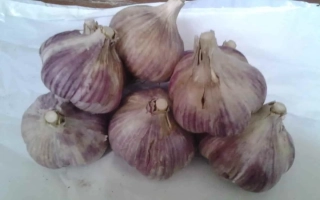
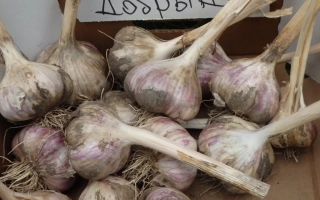
Visual presentation is everything in today's fresh market. The distinct lilac hue of the outer scales, marked with characteristic stripes, makes Nazus stand out on shelves. Its medium-pungent flavor profile is versatile, making it an excellent choice for both retail sale and industrial processing, such as in marinades, sauces, or spice production.
Cultivation and Management Notes
- Scape Management: Being a bolting variety, timely removal of the scapes is essential. This redirects energy back into the bulb, ensuring the target weight is met.
- Storage Stability: Nazus maintains its quality well during storage, allowing growers to time their sales for optimal market pricing rather than selling immediately after harvest.
- Uniformity: The consistent number of cloves makes selecting seed bulbs for the following season straightforward, as the high-potential heads are easily identified.
Bottom line: Nazus is a practical choice for the modern agronomist. It combines aesthetic appeal with solid productivity, backed by the expertise of the Ural Center for Advanced Vegetable Technologies. It is a dependable asset for any farm operation focused on profitability and high-quality vegetable production.
Crop & resistance
Crop
Specifications
| Type | |
|---|---|
| Features | |
| Number of cloves in the head | 4-6 |
| Average head weight (g) | 60-80 |
| Outer scale color | |
| Flavor | |
| Yield (kg/m2) | 1,5-2,0 |
| Purpose | |
| Registration year | 2003 |
| Catalog | Catalog → Garlic |
| Manufacturer | Ural Center of Advanced Technologies Ovoshevod |
| Country | Russia |
No reviews yet. Be the first to share your experience.






See also
Often considered together with this variety






Recently viewed
Products you’ve viewed on this site
Reviews