Trumpeter is a perennial herbaceous plant about 70–80 cm tall, belonging to the species Datura innoxia. The bush is erect, branched and hairy, green or dark purple in color. Leaves are alternate, obovate with an acute apex, slightly emarginate on the edges. When damaged, all parts of the plant emit a characteristic pungent smell reminiscent of rancid peanut oil.
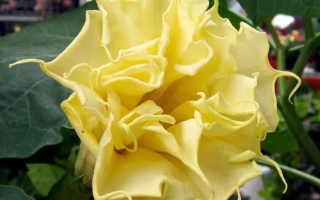
Flowers are solitary and white, located at the base of stem forks. They open at night and remain open only in cloudy weather. The calyx is inflated and ends with five (sometimes two or three) teeth. The fruit is a blue-green or brown multi-seeded capsule with thin awl-like spines; when ripe it may split or remain closed. Seeds are yellowish-brown, capable of winter dormancy and can persist in the soil for years.
Trumpeter is known for its alkaloid properties: it contains hyoscyamine, atropine and scopolamine (0.15% in stems, 0.26% in roots and 0.22% in seeds). The plant is poisonous; improper use can cause severe poisoning with hallucinations. However, in controlled doses, leaves and seeds are used for medicinal purposes: leaf tinctures calm the nervous system, have spasmolytic effects and are used for bronchitis, asthma and epilepsy; a decoction of flowers is used for angina pectoris and epilepsy. Seeds are also included in preparations for fighting asthma.
To grow Trumpeter, seeds are soaked in cold water or a growth stimulant, then sown to a depth of 1 cm in pots, covered with glass and kept at a temperature of about +20 °C. After seedlings appear, they are transplanted into separate containers with sufficient lighting and abundant watering. When reaching a height of 15–20 cm, plants are moved to open ground, where they prefer sunny places without drafts. Watering should be regular but not excessive; during active growth, organic fertilizers (manure, compost) are added twice a month.
The flowering period of Trumpeter lasts from March to November, and it fruits from August. With proper care, the plant can serve as both a decorative element of the garden and a source of medicinal means, but due to its high toxicity, its use requires caution and adherence to dosages.