


SKU #73323
·
51 views
Wheatgrass HUTEL
Couch Grass
Prices in stores
No offers yet — stores have not added prices for this product yet.
Similar varieties with prices
All offers: Couch Grass
Use Direction
Feed
Protein content (%)
10-15%
Registration year
1994
Your mark
0 votes
0% positive ratings
Description
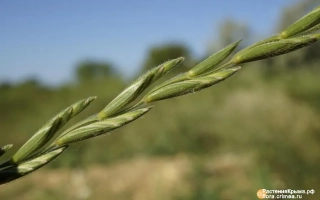
HUTEL reedgrass is a variety of perennial grass developed by the Buryat Scientific Research Institute of Agriculture. Its Latin name is Elymus trachycaulus (Link) Gould ex Shinners, code 9001557. The variety is distinguished by its resistance to adverse climatic conditions and its ability to root quickly in various soil types.
In agricultural practice, HUTEL is used as a fodder crop. It is characterized by a moderate growth rate: it lags behind oat grass but surpasses meadow timothy. Hay obtained from this variety in the heading stage (mid-June) contains about 10.6% protein, and in the flowering stage – approximately 9.6%. The hay quality is somewhat coarse but sufficient for livestock feeding. When mowing, 100 kg of hay yield 54 feed units and contain about 4.5 kg of digestible protein.
HUTEL reedgrass is primarily used as mown fodder; it is less frequently used for grazing animals. The variety has weak foliage and regrowth, making it less attractive compared to other grasses, yet it maintains a high content of digestible nutrients. Its main drawback is the similarity in appearance of its seeds and plants to creeping reedgrass, which can lead to field contamination when used in grass mixtures.
Crop & resistance
Crop
Specifications
| Use Direction | |
|---|---|
| Protein content (%) | 10-15% |
| Registration year | 1994 |
| Catalog | Catalog → Couch Grass |
| Legal data |
Show · 1 |
| Country | Russia |
No reviews yet. Be the first to share your experience.
Alternatives
Couch Grass · similar varieties




See also
Often considered together with this variety




Recently viewed
Products you’ve viewed on this site
Reviews