
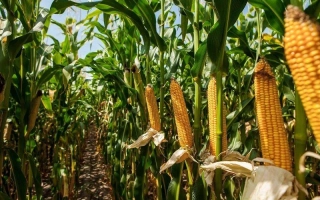

SKU #56076
·
42 views
LFH 301
Corn
LIMAGRAINUser rating
0 votes0% positive reviews
No ratings yet — be the first.
Hybrid Type
Simple Hybrid
Use Direction
Grain, Silage
Recommended Density
30-35 thousand pcs/ha, 65-75 thousand pcs/ha
Registration year
2020
About product

A stable and high-yielding French-bred hybrid, perfectly suited for both grain and silage production with excellent pest resistance.
Hybrid Type
Simple Hybrid
Use Direction
Grain, Silage
Recommended Density
30-35 thousand pcs/ha, 65-75 thousand pcs/ha
Registration year
2020
Description
Field Performance of Limagrain LFH 301
When selecting a hybrid for farms that balance grain production with silage needs, the versatility of Limagrain LFH 301 is a key advantage. As an agronomist, I find this simple hybrid highly predictable in the field. It responds consistently to standard farming practices without requiring overly complex or expensive management systems.
Agronomic Resilience and Pest Control
Managing disease and pests is the biggest operational challenge in corn cultivation. LFH 301 alleviates this significantly. Its resistance to common smut is reliable, and its natural tolerance to the European corn borer helps protect both stalk integrity and ear development. This resistance reduces the need for repeated insecticide applications, which saves on input costs and protects the crop from late-season damage that often complicates harvesting.
Seeding Density and Yield Management
The flexibility in plant population allows you to tailor the seeding rate to your specific soil moisture levels and production goals:
- For high-intensity production or irrigated fields, I recommend a density of 65,000 to 75,000 plants per hectare to maximize grain yield.
- In drier conditions or on less fertile soils, scaling back to 30,000 to 35,000 plants per hectare prevents inter-plant competition for moisture, ensuring high-quality silage production.
French breeding from Limagrain shines through in the crop's uniformity. The plants develop evenly, which makes harvesting smoother and more efficient for the operator, reducing fuel consumption and machine wear. The predictability of the LFH 301 growth cycle makes scheduling the harvest season much easier, allowing for better logistical planning across your operations.
Crop & resistance
Crop
Disease resistance
Pest resistance
Specifications hover over for a hint about the specification
| Hybrid Type | |
|---|---|
|
Use Direction
Use Direction
Dual-purpose hybrids: for silage and grain in all growing regions. These are "stay-green" type hybrids, meaning the plants remain green for a longer period. However, this does not affect the sugar, cellulose, and hemicellulose content, nor the degree of lignification of the plant... |
|
|
Recommended Density
Recommended Density
Optimal productivity is achieved at a planting density of 4000-5500 plants/ha. Possible planting scheme: 300-500x40-80 cm. |
30-35 thousand pcs/ha, 65-75 thousand pcs/ha |
| Registration year | 2020 |
| Catalog | Catalog → Corn |
| Manufacturer | LIMAGRAIN |
| Country | France |
Store offers
Prices are updated on loadLoading offers…
Aggregator catalog: prices are collected automatically from store websites, normalized by AI and converted at the current exchange rate. Before ordering, confirm the price and availability on the store's website. This block is not indexed by search engines — the data is loaded after the page opens.
Not yet комментариев. Be the first!
Alternatives
Maize seeds · similar varieties





See also
Often considered together with this variety




Recently viewed
Products you’ve viewed on this site
Reviews · 0