


SKU #69486
·
33 views
MEMORY OF BURLA
Clover
User rating
0 votes0% positive reviews
No ratings yet — be the first.
Usage Type
Feed on green mass, Hay
Vegetation Period
80-110
Plant Height
40-80
Flower Color
Pink
About product

Memory of Burla is a variety of red clover (Trifolium pratense L.), characterized by a diploid set of chromosomes and a single-cut harvesting type. It belongs to late-ripening varieties with a period from the beginning of spring regrowth to seed maturity of 130–140 days. The plants have a semi-spreading bush form, stems of medium softness and up to 130 cm in length, weakly hairy or practically hai…
Usage Type
Feed on green mass, Hay
Vegetation Period
80-110
Plant Height
40-80
Flower Color
Pink
Description
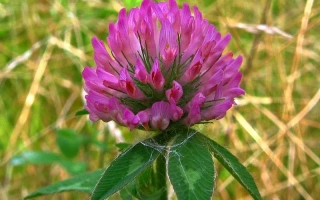
Memory of Burla is a variety of red clover (Trifolium pratense L.), characterized by a diploid set of chromosomes and a single-cut harvesting type. It belongs to late-ripening varieties with a period from the beginning of spring regrowth to seed maturity of 130–140 days. The plants have a semi-spreading bush form, stems of medium softness and up to 130 cm in length, weakly hairy or practically hairless. Leaves are of medium size with a large number of plants having white markings, while the inflorescences are colored pink. Seeds are multicolored, with the mass of 1000 seeds ranging from 1.8 to 1.9 g. The variety exhibits high winter hardiness and medium drought resistance, making it suitable for cultivation in the Central, Central Black Earth, and Middle Volga regions of Russia. The green mass yield of the Memory of Burla variety reaches 35–40 tons per hectare, while the hay yield is 7–8 tons per hectare. The crude protein content in dry matter ranges from 13.2% to 14.6%, indicating the high quality of feed raw material. The average dry matter yield in growing regions is approximately 63.6 centners per hectare, which corresponds to the standard level. The variety shows resistance to diseases such as anthracnose, powdery mildew, rust, and fusarium, but is susceptible to clover rot. The chemical composition of seeds is characterized by nitrogen content ranging from 5.12 to 5.65%, phosphorus from 0.679 to 0.729%, and potassium at average or slightly elevated levels. A positive correlation has been established between nitrogen and phosphorus content, indicating balanced plant nutrition. These indicators are important for assessing the nutritional value of seeds and their impact on subsequent plant development. The Memory of Burla variety is recommended for use in feed production due to the combination of high productivity, resistance to adverse conditions, and good quality of feed mass.
Crop & resistance
Crop
Disease resistance
Specifications
| Usage Type | |
|---|---|
| Vegetation Period | 80-110 |
| Plant Height | 40-80 |
| Flower Color | |
| Green Mass Yield (t/ha) | 30-40 |
| Hay Yield (t/ha) | 6-8 |
| Variety Characteristics | |
| Registration year | 2004 |
| Catalog | Catalog → Clover |
| Legal data |
Show · 11
|
| Country | Russia |
Store offers
Prices are updated on loadLoading offers…
Aggregator catalog: prices are collected automatically from store websites, normalized by AI and converted at the current exchange rate. Before ordering, confirm the price and availability on the store's website. This block is not indexed by search engines — the data is loaded after the page opens.
Not yet комментариев. Be the first!



See also
Often considered together with this variety


KRETUNOVSKIY
ФГБНУ Федеральный Аграрный Научный Центр Северо-востока имени Н.В. Рудницкого
043 1 offer
6.73 €per 1 kg ≈ 347 ₴


Recently viewed
Products you’ve viewed on this site
Reviews · 0