


SKU #61444
·
47 views
Dubler
Cabbage
User rating
0 votes0% positive reviews
No ratings yet — be the first.
Plant Type
White cabbage
Direction
Fresh Market, Recycling
Maturation (seedlings)
140-150 days
Cabbage head; mass
2.0-3.0 kg
About product

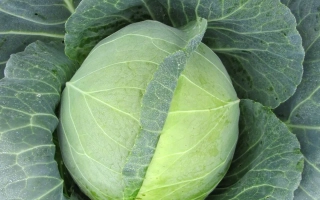
Duplier cabbage is a late-maturing hybrid of white cabbage, characterized by a vegetation period from germination to maturation of about 145-150 days. Plants of this variety are small and compact, with a semi-erect rosette of medium-sized leaves. Leaves have an inverse egg-shaped form, gray-green color with a strong waxy coating, a slightly vesicular surface, and a slightly wavy edge, giving them…
Plant Type
White cabbage
Direction
Fresh Market, Recycling
Maturation (seedlings)
140-150 days
Cabbage head; mass
2.0-3.0 kg
Description
Duplier cabbage is a late-maturing hybrid of white cabbage, characterized by a vegetation period from germination to maturation of about 145-150 days. Plants of this variety are small and compact, with a semi-erect rosette of medium-sized leaves. Leaves have an inverse egg-shaped form, gray-green color with a strong waxy coating, a slightly vesicular surface, and a slightly wavy edge, giving them an attractive appearance and contributing to resistance to unfavorable conditions. Heads are oval-shaped, dense, weighing from 2.5 to 3.5 kg, with a whitish internal structure and a short internal stalk. The external stalk is of medium length, which facilitates harvesting and processing of the crop.
The Duplier hybrid is characterized by high resistance to cracking and genetic resistance to fusarium wilt, which significantly increases the reliability of cultivation and product quality. Thanks to the dense structure of the heads and good taste qualities, cabbage is suitable for consumption fresh, pickling, and short-term storage. When storage conditions are met, more than 80% of the product retains its commercial qualities even after four months, while the hybrid is resistant to stalk blackening, which is important for long-term preservation and transportation.
Duplier is well adapted to seedless technology of cultivation, which simplifies agrotechnology and reduces production costs. Plants do not change the shape of the head depending on day length and temperature, which ensures crop stability. The recommended planting scheme is 70x45 cm, which allows to obtain a yield of up to 10-12 kg per square meter. All these characteristics make Duplier cabbage a demanded variety among farmers and lovers of quality vegetable products.
The Duplier hybrid is characterized by high resistance to cracking and genetic resistance to fusarium wilt, which significantly increases the reliability of cultivation and product quality. Thanks to the dense structure of the heads and good taste qualities, cabbage is suitable for consumption fresh, pickling, and short-term storage. When storage conditions are met, more than 80% of the product retains its commercial qualities even after four months, while the hybrid is resistant to stalk blackening, which is important for long-term preservation and transportation.
Duplier is well adapted to seedless technology of cultivation, which simplifies agrotechnology and reduces production costs. Plants do not change the shape of the head depending on day length and temperature, which ensures crop stability. The recommended planting scheme is 70x45 cm, which allows to obtain a yield of up to 10-12 kg per square meter. All these characteristics make Duplier cabbage a demanded variety among farmers and lovers of quality vegetable products.
Crop & resistance
Crop
Disease resistance
Specifications hover over for a hint about the specification
| Plant Type | |
|---|---|
|
Direction
Direction
Existing varieties and types of cabbage are grown for fresh consumption, long-term storage, and technical processing. |
|
|
Maturation (seedlings)
Maturation (seedlings)
By the length of the vegetation period, cabbage varieties are conditionally divided into three maturity groups: early maturing (100 — 120 days), mid-season maturing (120 — 150 days), and late maturing (more than 150 days). When sowing cabbage seeds in March — April, cabbage seedl... |
140-150 days |
|
Cabbage head; mass
Cabbage head; mass
The mass of the cabbage head depends on the variety characteristics and cultivation techniques. It can reach 10 kg and even more. |
2.0-3.0 kg |
|
Storage
Storage
Depending on the variety characteristics, the storage period for heads may vary from one month for early varieties to eight months for late cabbage varieties. |
3-6 months |
| Registration year | 2011 |
| Catalog | Catalog → Cabbage |
| Legal data |
Show · 2
|
| Country | Russia |
Store offers
Prices are updated on loadLoading offers…
Aggregator catalog: prices are collected automatically from store websites, normalized by AI and converted at the current exchange rate. Before ordering, confirm the price and availability on the store's website. This block is not indexed by search engines — the data is loaded after the page opens.
Not yet комментариев. Be the first!
Alternatives
Cabbage seeds · similar varieties




See also
Often considered together with this variety







Recently viewed
Products you’ve viewed on this site
Reviews · 0