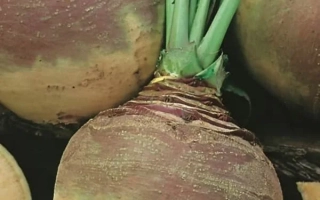
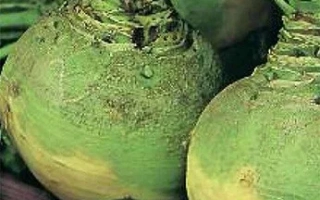
Beetroot is a root vegetable that combines the properties of cabbage and turnip. Its taste resembles a turnip, but it is more nutritious: rich in iron, vitamins C and A, promoting immune system strengthening and improved digestion. The roots are large, weighing from 350 to 1000 grams, with a hard, juicy yellow flesh and a light-lilac skin due to anthocyanins.
The variety differs in cold hardiness and resistance to bolting, making it suitable for fresh consumption and long-term winter storage. Beetroot is easily grown on fertile, neutral-acid loamy soils; yield decreases on sandy soil. The optimal growth temperature is 15–18 °C, and +3 °C is sufficient for germination. Regular watering and moderate fertilization (ammonium nitrate, superphosphate, potassium sulfate) contribute to the development of a large root with juicy flesh.
After harvesting, the roots are cleaned of earth, leaves are cut off, and they are dried in the air for several hours. They are stored in a cellar or boxes at moderate humidity; plastic bags are unsuitable due to increased humidity. With proper storage, beetroot retains its nutritional properties until spring, remaining tasty and beneficial.