
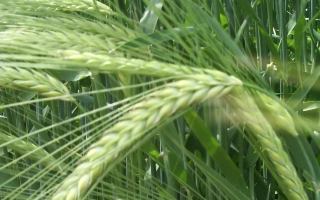

SKU #60390
·
36 views
Barley Boyarin
Barley
ФГБНУ Федеральный Аграрный Научный Центр Северо-востока имени Н.В. РудницкогоUser rating
0 votes0% positive reviews
No ratings yet — be the first.
Plant Type
Spring barley
Vegetation Period (Maturity)
80-90 days
Seed; mass 1.000seeds
42-44 grams, 44-46 grams, 46-48 grams, 48-50 grams, 50-52 grams
Grain; Nitrogenous substances content in dry residue, %
12
About product

A spring barley variety with high resistance to leaf spot and rust, featuring a short maturation period.
Plant Type
Spring barley
Vegetation Period (Maturity)
80-90 days
Seed; mass 1.000seeds
42-44 grams, 44-46 grams, 46-48 grams, 48-50 grams, 50-52 grams
Grain; Nitrogenous substances content in dry residue, %
12
Description
Yield Stability: The Potential of 'Boyarin' Barley
The spring barley variety 'Boyarin', developed by the N.V. Rudnitsky Federal Agricultural Research Center of the North-East, offers a robust solution for farmers focused on consistent grain production. The key strength of this cultivar lies in its genetic resistance to a spectrum of pathogens that typically limit yield in intensive farming systems.
Phytosanitary Defense
'Boyarin' demonstrates high resistance to various diseases, which facilitates a reduction in fungicide application during the growing season. The target pathogens include:
- Helminthosporiosis and Mycosphaerella leaf spot;
- Brown leaf spot;
- Plant rust;
- Stem smut.
This resistance profile is crucial for maintaining photosynthetic leaf area during tillering and stem elongation, which directly impacts grain filling efficiency.
Morphology and Performance
The vegetation period spans 80–90 days, allowing the crop to utilize early-spring moisture effectively and complete its cycle before peak summer temperatures. The 1000-seed weight ranges from 42 to 52 grams, depending on the agricultural background and moisture conditions, indicating high potential grain weight. The nitrogenous content in the dry matter is recorded at 12%, providing solid nutritional value for feed purposes.
Utilizing this variety is justified in fields where a combination of rapid maturation and fungal infection protection is required. Stable grain filling and disease resistance make 'Boyarin' a reliable component for crop rotation planning.
Crop & resistance
Crop
Specifications
| Plant Type | |
|---|---|
| Vegetation Period (Maturity) | 80-90 days |
| Seed; mass 1.000seeds | 42-44 grams, 44-46 grams, 46-48 grams, 48-50 grams, 50-52 grams |
| Grain; Nitrogenous substances content in dry residue, % | 12 |
| Registration year | 2023 |
| Catalog | Catalog → Barley |
| Manufacturer | ФГБНУ Федеральный Аграрный Научный Центр Северо-востока имени Н.В. Рудницкого |
| Country | Russia |
Store offers
Prices are updated on loadLoading offers…
Aggregator catalog: prices are collected automatically from store websites, normalized by AI and converted at the current exchange rate. Before ordering, confirm the price and availability on the store's website. This block is not indexed by search engines — the data is loaded after the page opens.
Not yet комментариев. Be the first!
Alternatives
Barley seeds · similar varieties


See also
Often considered together with this variety




Recently viewed
Products you’ve viewed on this site
Reviews · 0