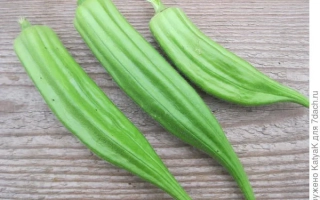
Bombay Okra – an annual vegetable crop, a herbaceous plant with large dark-green leaves covered in stiff fuzz, and cream-colored flowers with a purple spot in the center. The fruits are elongated green pods covered in hairs, resembling peppers in appearance but tasting like eggplants and asparagus.
The variety is characterized by high fertility: 5–10 pods can be harvested from a single bush at once. Harvesting begins a few days after the fruits reach a size of 4–6 cm and is conducted every 3–4 days until frost. Due to the high mucilaginous content, okra is beneficial for the prevention and treatment of gastrointestinal tract diseases, as well as for restoring strength after heavy physical work.
The seedling method is used for cultivation: seeds germinate in 2–3 weeks at a temperature of 18–21 °C. Plants are transplanted into open ground after spring frosts, usually after June 10, in sunny locations with fertile light soil. The distance between plants is 40 cm, and the row spacing is 70 cm. Fruiting continues until cold weather.
Bombay Okra is suitable for preparing fried and stewed dishes, soups, salads, as well as a side dish for fish, poultry, and meat. Seeds can be roasted instead of coffee or used for oil extraction, rich in unsaturated fats. Leaves are used in salads and soups, making the plant a valuable ingredient in diverse cuisines.