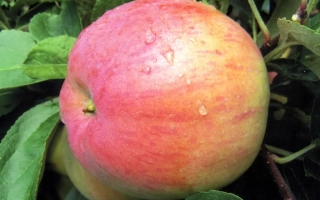
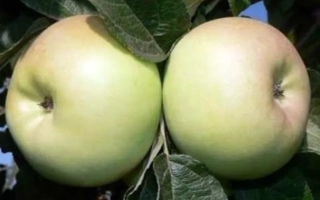
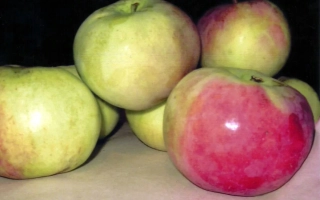
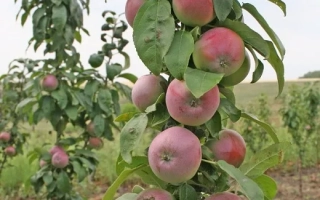
The YUNONA apple variety is a late-summer variety created by the Southern Scientific Research Institute of Horticulture and Viticulture (SCZNISiV) in collaboration with the All-Russian Research Institute of Pomology (VNIIISPk). The tree is of medium height with a rounded, medium-density crown and mixed fruiting type. It bears fruit early: grafted on the M9 rootstock, the apple tree begins to fruit as early as the 2nd-3rd year after planting. The variety possesses the Vf immunity gene to scab, is resistant to powdery mildew, drought, and frost, making it suitable for intensive cultivation in various climatic zones, including the Pre-Caspian, Steppe, Foremountain, and Black Sea zones. YUNONA apples are large to extra-large, with an average weight of about 300 grams, and have a round shape. The main skin color is light yellowish-green with a bright crimson blurred blush covering most of the surface. The flesh is creamy, very juicy, with an exquisite sweet-and-sour taste and a delicate aroma. The chemical composition of the fruit includes 14.0% dry matter, 10.0% sugars, 0.63% titratable acids, as well as vitamins C and P (catechins) in significant amounts, which enhances their nutritional value. The YUNONA apple tree prefers fertile soils with moderate moisture and is suitable for cultivation using intensive technologies. The variety is resistant to major diseases such as scab and powdery mildew, but may be affected by rust, powdery mildew, and spot. Among pests, the following pose a threat: spider mite, aphid, flea beetles, tortrix moth larvae, flower weevil, apple leafhopper, and codling moth. Despite its spreading crown and the fact that YUNONA is a poor pollinator for other varieties, it is valued for the high quality of its fruit and its adaptability to various growing conditions.