


SKU #60180
·
52 views
SUBAROVA'S MEMORY
Apple
User rating
0 votes0% positive reviews
No ratings yet — be the first.
Tree; Growth Power
Medium-height
Tree; Canopy Shape
Round Canopy
Fruit; Fruit Shape
Oblong-rounded-conical
Fruit; Fruit mass
100-150 grams
Store offers · 2 from 2 stores
Prices are updated on loadLoading offers…
Available at: Лучший Сад · Сад от А до Я
Aggregator catalog: prices are collected automatically from store websites, normalized by AI and converted at the current exchange rate. Before ordering, confirm the price and availability on the store's website. This block is not indexed by search engines — the data is loaded after the page opens.
About product

The Memory Subarova apple variety was created by Belarusian scientists at the Fruit Growing Institute of the National Academy of Sciences of Belarus by crossing the Serueval and Belarusian Sinap varieties. This variety is characterized by medium-sized trees with a rounded, compact, and medium-density crown that is easily shaped into a slim spindle type. Branches are straight, diverge at an angle c…
Tree; Growth Power
Medium-height
Tree; Canopy Shape
Round Canopy
Fruit; Fruit Shape
Oblong-rounded-conical
Fruit; Fruit mass
100-150 grams
Description
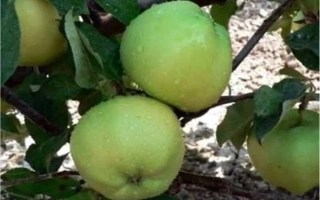
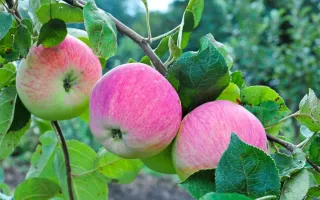
The Memory Subarova apple variety was created by Belarusian scientists at the Fruit Growing Institute of the National Academy of Sciences of Belarus by crossing the Serueval and Belarusian Sinap varieties. This variety is characterized by medium-sized trees with a rounded, compact, and medium-density crown that is easily shaped into a slim spindle type. Branches are straight, diverge at an angle close to 90 degrees, and point upwards, while the bark on the trunk is smooth and brown. Fruiting is of a mixed type – on spur shoots, fruiting spurs, and ends of shoot tips. The variety is adapted to the climatic conditions of Belarus and Russia, possesses high winter hardiness and resistance to scab, rust, powdery mildew, and speckle. The fruits of the Memory Subarova variety are large, medium-sized at about 140 grams, oval-conic in shape, sometimes with sloping outlines. Their coloration is light green with a blurred striped red blush. The flesh is white or light green, dense, juicy, tender, and fine-grained, with a pleasant sweet-and-sour taste and medium aroma. The chemical composition of the fruits is characterized by the content of soluble dry substances of about 13%, sugars – 9.53%, titratable acids – 0.78%, and ascorbic acid – 10.4 mg per 100 grams. The tasting score of taste qualities reaches 4.5–4.6 points. Harvest maturity occurs in the second half of September – first half of October, by which time apples require aging to reach consumer maturity. The best period for fresh consumption is from January to June. The variety is distinguished by high yield, stable and regular fruiting, as well as good fruit preservation during long-term storage. Due to high resistance to fungal diseases and frost, the Memory Subarova apple tree is a reliable choice for cultivation in the northwestern and central regions of Russia, as well as in Belarus.
Video · 2 videos
Suggest a video →Crop & resistance
Disease resistance
Specifications hover over for a hint about the specification
| Tree; Growth Power | |
|---|---|
| Tree; Canopy Shape | |
| Fruit; Fruit Shape | |
| Fruit; Fruit mass | 100-150 grams |
| Fruit; Fruit Color (Base Color) | |
| Fruit; Blush (Blush Color) | |
|
Fruit; flesh color
Fruit; flesh color
Color of the fruit flesh. There are red, pink, yellow, and brown colors. |
|
| Fruit; Taste qualities | 4.5 stars |
| Fruit; Lying | 6-7 months |
| Cold Resistance | |
| Registration year | 2002 |
| Catalog | Catalog → Apple |
| Legal data |
Show · 5
|
| Country | Russia |
Not yet комментариев. Be the first!
Alternatives
Apple saplings · similar varieties


TIKHOMIROV REMEMBER APPLE
BOTANIChESKIJ SAD MGU IM.M.V.LOMONOSOVA
044 3 offers
6.01 €per seedling ≈ 310 ₴




See also
Often considered together with this variety


Recently viewed
Products you’ve viewed on this site
Reviews · 0