
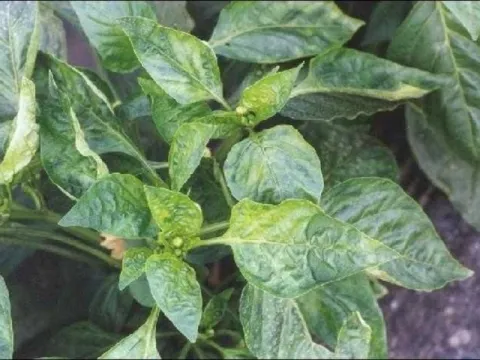
Pepper mild mottle virus
Pepper mild
Pepper mild mottle virus (PMMoV) is a highly stable plant virus belonging to the Tobamovirus genus. It primarily infects Solanaceous crops, with peppers being the most significantly affected.
What the section contains
Pepper mild mottle virus
The virus is known for its extreme resilience in the environment. It does not require insect vectors and is transmitted primarily through mechanical contact between healthy and infected tissues.
PMMoV persists in seeds, soil, crop residues, tools, and even on clothing. Its high stability allows it to remain infectious for years, making sanitation a critical challenge for growers.
As a single-stranded RNA virus, it replicates efficiently within the host's cells. Its ability to mutate can occasionally lead to the breakdown of resistance in pepper cultivars.
The virus can infect plants through microscopic wounds caused by standard agricultural practices, such as pruning, tying, or harvesting, facilitating rapid spread across a greenhouse.
Symptoms of PMMoV infection include a characteristic mosaic pattern on the leaves, featuring alternating light and dark green patches. Leaf distortion, curling, and crinkling are also common.
Infected plants exhibit stunted growth, often appearing significantly smaller and weaker than healthy neighbors. The overall development of the plant is severely inhibited.
Fruit symptoms are particularly damaging to production. Peppers often develop an irregular, lumpy shape, and may exhibit mottled skin or sunken, necrotic spots, reducing marketability.
Fruit ripening can be delayed and uneven, with some fruits remaining small and deformed. In severe cases, internal tissues of the fruit may also show signs of necrosis.
Seedlings infected at an early stage may show systemic chlorosis and yellowing of veins, often leading to total loss of the young crop if early management is not prioritized.
High temperatures in protected cultivation environments significantly promote the multiplication and spread of PMMoV. Optimal replication often occurs in the 25–30°C range.
Human activity is the primary driver of transmission within a facility. Handling infected plants and then touching healthy ones without proper sanitization spreads the virus rapidly.
High planting density in modern greenhouse systems increases the frequency of plant-to-plant contact, creating an environment where the virus can spread like wildfire.
Contaminated seeds are a major pathway for long-distance dissemination. Seed treatments are often ineffective at neutralizing the virus inside the seed coat.
Reservoir hosts, including wild Solanaceous weeds located near or inside the greenhouse, play a vital role in the virus's ability to survive between growing seasons.
The economic impact of PMMoV is substantial, as infected crops can suffer yield losses of up to 80%. This makes it a major concern for commercial pepper producers worldwide.
Marketability is severely affected by the deformation and discoloration of fruits. Even slightly symptomatic peppers are often rejected by retailers, leading to financial waste.
Infected plants become more susceptible to secondary infections, including fungal and bacterial pathogens, which can exacerbate the physical degradation of the crop.
The persistence of the virus necessitates long-term disinfection strategies, increasing costs for growers who must manage recurring outbreaks within their greenhouse infrastructure.
Since there are no curative chemical treatments for plant viruses, the financial loss is compounded by the labor and material costs required to eradicate the disease from the site.
Integrated management is essential, focusing primarily on prevention. Utilizing certified, virus-free seed is the most important strategy for preventing the initial introduction of PMMoV.
Strict hygiene protocols must be enforced, including the mandatory washing of hands with soap and the use of fresh gloves for workers moving between different greenhouse sections.
Disinfecting all tools and equipment between use is mandatory. Chemical agents such as trisodium phosphate (TSP) are commonly used to deactivate Tobamoviruses on surfaces.
- Immediate removal and disposal of infected plants and surrounding soil.
- Rigorous disinfection of greenhouse structures before the start of a new season.
- Planting resistant or tolerant pepper hybrids when available.
- Eliminating wild host weeds in and around the growing area.
Monitoring for early symptoms allows for the isolation of infected rows, which can slow the spread of the virus and protect the remainder of the commercial crop.