
Pepper mottle virus
Potyvirus peporesticulae
Description
Symptoms
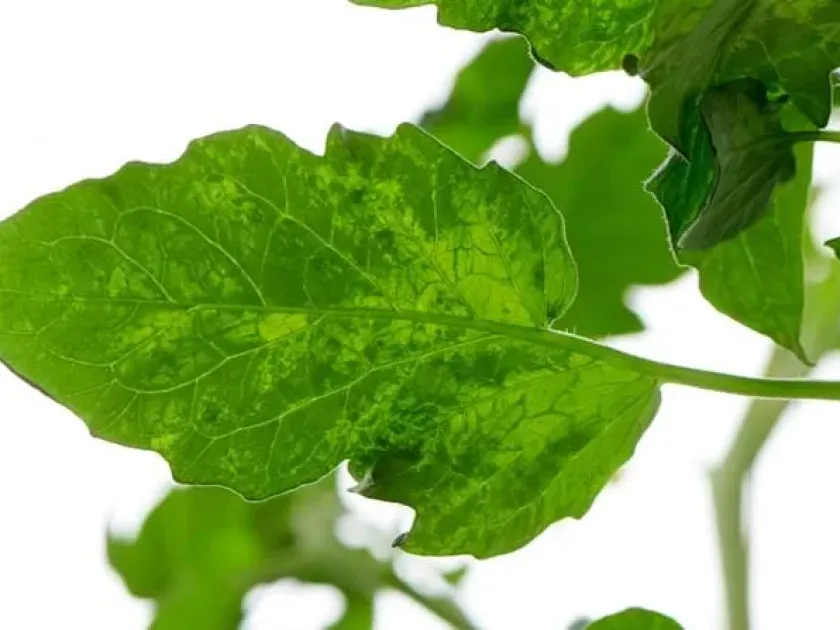
The primary symptom of this viral infection is a characteristic mosaic pattern on the leaves, featuring alternating light and dark green areas. As the disease progresses, distinct mottling becomes apparent, often accompanied by leaf distortion and curling.
Apical leaves frequently become stunted and chlorotic, giving the plant a dwarfed and sickly appearance. In some cases, necrotic spots or ring-like patterns may appear on the fruits, significantly reducing their market value and quality.
A severe infection often leads to the premature shedding of flowers and fruits, causing a drastic decline in overall yield. Infected plants often show shortened internodes, which further contributes to their stunted growth habit.
Visual symptoms can be exacerbated by environmental fluctuations, such as rapid changes in temperature or nutrient deficiencies. Stunted, discolored plants are usually easily identifiable in a field of healthy crops.
Confirming the presence of the virus often requires diagnostic tools like ELISA or PCR tests, as early-stage symptoms can easily be confused with nutrient deficiencies or other physiological disorders common in solanaceous crops.
Pathogen
The disease is caused by a virus belonging to the Potyvirus genus, characterized by its long, flexuous, filamentous particles. Like all viruses, it is an obligate parasite that requires living plant tissue to replicate.
The primary hosts for this pathogen include solanaceous crops such as sweet peppers, chili peppers, tomatoes, and eggplants. Many common weed species serve as alternative hosts, acting as reservoirs for the virus throughout the year.
The virus is primarily transmitted in the field by various species of aphids, which transmit the pathogen in a non-persistent manner. This means the virus only needs to be picked up by the aphid's stylet during brief probing of the plant tissue.
Mechanical transmission is also a major concern, as the virus can be spread during routine agricultural tasks like pruning, staking, or harvesting. The sap of an infected plant contains enough viral load to spread the disease to healthy neighboring plants.
While seed transmission is not the most common pathway, the longevity of the virus in plant debris and perennial weeds makes it a persistent threat that reappears at the start of each growing season.
Conditions for development
The spread of the virus is highly dependent on the population dynamics of its insect vectors. Warm, dry weather conditions tend to favor the reproduction and migration of aphids, leading to rapid disease outbreaks across fields.
High plant density and the presence of nearby weed populations provide ideal conditions for the virus to circulate within and between crops. Weeds function as natural reservoirs, maintaining the viral presence during off-seasons.
The virus replicates optimally within plant tissues at temperatures between 20°C and 28°C. Plants under stress, such as those suffering from drought or temperature extremes, are significantly more susceptible to infection.
Poor sanitation practices during field operations, such as failing to disinfect tools, facilitate the mechanical spread of the virus. Once the virus enters a greenhouse or a field, it can spread exponentially if left unchecked.
Imbalanced fertilization, particularly an excess of nitrogen, promotes lush growth that is often more attractive to aphids and more prone to viral replication, causing symptoms to develop faster.
Why it matters
The most severe aspect of this disease is that it is irreversible; there are no chemical treatments available to cure an infected plant. Once a plant is infected, it remains a source of the virus for its entire lifespan.
Yield losses can be catastrophic, often ranging from 50% to 80% depending on the stage of infection. Beyond the quantity, the quality of the harvested produce is heavily compromised due to deformation and poor shelf life.
Reduced photosynthetic efficiency leaves the plant weakened, hindering normal physiological processes and resulting in undersized or unmarketable fruits. The overall metabolic disruption prevents proper development.
Infected plants exhibit a compromised immune system, making them much more vulnerable to secondary infections, such as bacterial soft rots or fungal pathogens. These complications often lead to the premature death of the plant.
Economic damage extends beyond crop loss, as growers may be forced to remove and destroy entire sections of their fields to protect the remaining healthy plants, significantly increasing labor and management costs.
Protection
Effective management relies on strict phytosanitary practices. The immediate removal and destruction of infected plants are essential to reduce the viral inoculum and prevent further spread within the field.
- Sourcing certified, virus-free seeds and transplants for planting.
- Implementing a robust insecticide program to manage aphid populations.
- Sanitizing pruning tools and equipment regularly with disinfectants.
- Maintaining proper spatial isolation between new crops and old field sites.
The use of genetically resistant or tolerant varieties is the most sustainable and effective long-term strategy for managing the virus. Selecting resilient cultivars minimizes the dependency on chemical pest control.
In greenhouses, installing fine-mesh insect screens is a highly effective way to prevent aphids from entering the facility. Controlling the internal microclimate also reduces stress-induced susceptibility.
Crop rotation and diligent weed management are critical components of an integrated pest management plan. Eliminating reservoir hosts around the field perimeter helps disrupt the virus’s life cycle during the winter months.
Discussion
No discussions yet — be the first.