
Pepper leaf curl virus
Begomovirus capsikanpurense
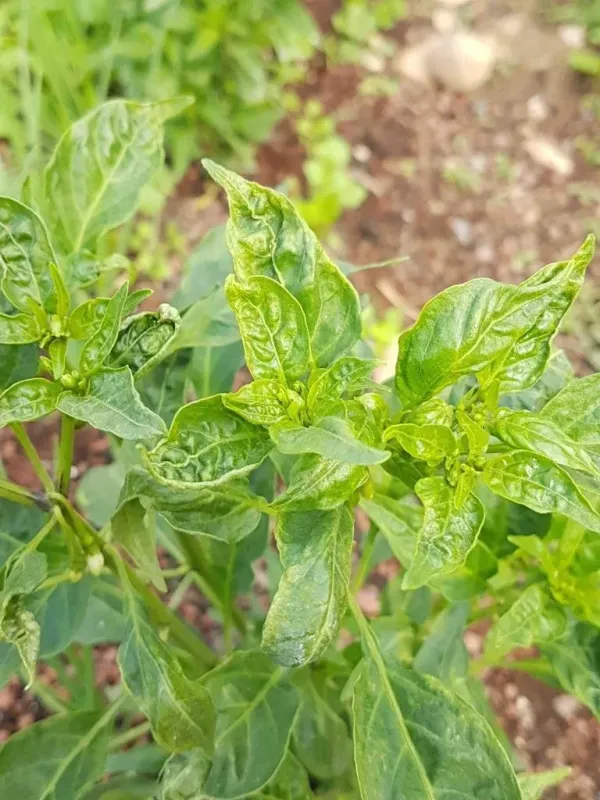
Description
Symptoms
The most distinctive symptom is the upward or downward curling of leaves, which typically starts at the terminal growth points of the pepper plant.
Leaves often exhibit severe chlorosis or mosaic patterns, where tissue between the veins loses its green pigment, significantly impairing photosynthesis.
Stunting is a common hallmark of infection; internodes become shortened, leading to a compact, bushy appearance that is clearly visible compared to healthy plants.
Reproductive success is severely compromised, with flower buds dropping prematurely or failing to develop, resulting in very low fruit set.
Any fruit that does develop is often stunted, misshapen, and shows significant surface discoloration, rendering it unsuitable for market sale.
Pathogen
The Pepper leaf curl virus belongs to the Begomovirus genus within the Geminiviridae family. These viruses are characterized by circular single-stranded DNA genomes.
The primary vector responsible for the transmission of this pathogen is the whitefly, Bemisia tabaci. The virus is acquired by the whitefly while feeding on infected plant phloem.
Once inside the insect, the virus circulates within its body before being transmitted to healthy plants during subsequent feeding episodes on their sap.
The pathogen causes systemic infection, spreading throughout the plant’s vascular tissue. It disrupts metabolic processes and interferes with the plant’s hormone regulation.
The survival of the virus depends on reservoir hosts, including various weeds and abandoned horticultural crops, which allow the virus to persist during off-seasons.
Conditions for development
High temperatures and dry, sunny conditions significantly accelerate the life cycle of the whitefly vector, leading to rapid population explosions.
The absence of consistent crop monitoring allows whitefly populations to build up undetected in weeds or surrounding non-crop vegetation before migrating to pepper fields.
Insufficient spatial isolation between susceptible solanaceous crops, such as tomatoes and peppers, encourages the cross-spread of the virus by mobile insect vectors.
Poor sanitation within greenhouse environments, such as uncleaned equipment or debris from previous seasons, facilitates the persistence and transmission of the virus.
Excessive nitrogen fertilization can sometimes promote lush, succulent growth that is highly attractive to whiteflies, inadvertently increasing the risk of virus transmission.
Why it matters
The economic impact of this virus is severe, with the potential for total crop loss in heavily infested fields due to the inability to produce marketable fruit.
Plants infected early in the season fail to reach maturity, reducing the total yield per hectare and increasing the cost of production for remaining plants.
Because the disease is systemic, there is no cure for an infected plant, necessitating the removal and destruction of the plant to protect the surrounding crop.
The secondary impact involves the massive expenditure required for insecticide programs intended to suppress whitefly populations throughout the growing cycle.
Overall, the disease threatens the viability of pepper production in affected regions, making it one of the most critical challenges for modern agricultural growers.
Protection
Management must focus on a multifaceted approach that prioritizes vector exclusion and host plant resistance to minimize the need for heavy chemical intervention.
Selecting and planting resistant or tolerant cultivars is the most sustainable and effective strategy available for long-term management of this begomovirus.
Rigorous management of weed populations in and around fields is essential to remove secondary host reservoirs that harbor both the virus and the vector.
- Use of fine-mesh insect-proof netting for greenhouse ventilation
- Regular monitoring and removal of symptomatic infected plants
- Application of systemic insecticides for early-stage vector control
- Strategic use of yellow sticky traps to track whitefly density
- Implementation of strict sanitation protocols for field tools and equipment
Finally, maintaining crop-free periods between production cycles helps to break the virus transmission cycle and lowers the initial inoculum level in the area.
Discussion
No discussions yet — be the first.