
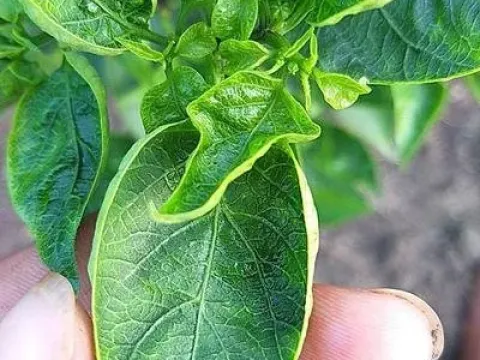
Pepper leaf curl virus
Begomovirus warburgi
The causative agent of the disease is a virus from the Begomovirus genus, belonging to the Geminiviridae family. These viruses are characterized by a single-stranded circular DNA genome.
What the section contains
Pepper leaf curl virus
It is a systemic viral disease that affects plant tissues at a cellular level, disrupting normal growth and causing irreversible developmental anomalies in pepper plants.
The primary vector responsible for transmitting the virus is the silverleaf whitefly (Bemisia tabaci). Without this insect, the virus cannot spread through a field or greenhouse.
The virus survives in reservoir weeds and surrounding vegetation, which serve as a host source throughout the year before being transmitted to new crops.
The biological cycle of the virus is strictly dependent on the whitefly, which acquires the pathogen after feeding on infected plants and transmits it to healthy ones.
The most prominent symptom is the severe curling and crinkling of the leaves. Leaf edges roll inwards or outwards, leading to a stunted and distorted appearance.
Leaves exhibit pronounced yellowing (chlorosis) along the margins, while the veins often remain dark green, creating a distinct mosaic or mottling effect.
Infected plants show severe dwarfing due to shortened internodes, often resulting in a bushy, rosette-like growth habit instead of normal vertical expansion.
Fruit production is significantly impaired; fruits are often absent, or if they develop, they are small, deformed, and lack commercial quality.
- Leaf curling and deformation.
- Mosaic yellowing on foliage.
- Severe plant stunting.
- Small, misshapen fruits.
The disease spread is heavily dependent on whitefly population density, which is favored by high temperatures (above 25°C) and dry weather conditions.
Greenhouse environments offer ideal conditions for the virus to thrive, as they maintain constant, warm temperatures that are perfect for rapid whitefly reproduction.
Poor sanitation around cultivation areas, including the presence of host weeds, facilitates the rapid migration of the virus into the crop.
Dense planting patterns can exacerbate the spread of the vector, allowing whiteflies to move easily between plants and spread the infection quickly.
The lack of crop rotation and continuous cultivation of solanaceous crops provides a constant source of infection, increasing the risk of early-stage infestation.
The virus is extremely harmful, causing significant yield losses as it disrupts the vascular system and physiological processes of the pepper plant.
Total yield loss can occur in severely infested fields, as infected plants become unproductive and are unable to recover from the viral damage.
The disease impacts marketability, as deformed fruits do not meet quality standards, leading to major economic losses for producers.
In greenhouse settings, the rapid transmission rate can result in the loss of an entire seasonal crop, posing a high financial risk to growers.
Because the disease is systemic and currently lacks curative treatments, management is exclusively focused on prevention and eradication of infected plants.
Effective management requires aggressive control of the whitefly population through the timely application of systemic insecticides upon initial detection.
Physical barriers, such as fine-mesh insect-proof screens on greenhouse vents and doorways, are essential to prevent the entry of virus-carrying whiteflies.
Rigorous sanitation measures, including the destruction of weeds and volunteer crops around the greenhouse or field, reduce potential viral reservoirs.
Prompt rogueing and burning of symptomatic plants are critical to prevent the spread of the virus to healthy plants within the plot.
Selecting and planting resistant pepper varieties is considered the most reliable and sustainable method for preventing the impact of the Begomovirus complex.