
Pepper mosaic
Begomovirus capsicummusivi
The Pepper mosaic disease is caused by a complex group of viruses, including those from the Geminiviridae family (begomoviruses) and the well-known Tobacco mosaic virus (TMV).
What the section contains
Pepper mosaic
These pathogens are highly stable and can persist in soil, crop residues, and infected seeds, posing a continuous threat to subsequent planting cycles.
The virus particles hijack the metabolic machinery of the host plant, forcing the cells to replicate viral proteins, which disrupts normal development and hormonal balance.
High contagiousness is a hallmark of these viruses, allowing them to spread rapidly through mechanical contact and insect vectors during standard agricultural operations.
Wild host plants around the fields often act as permanent reservoirs, ensuring that the virus remains active even when the primary crop is not being cultivated.
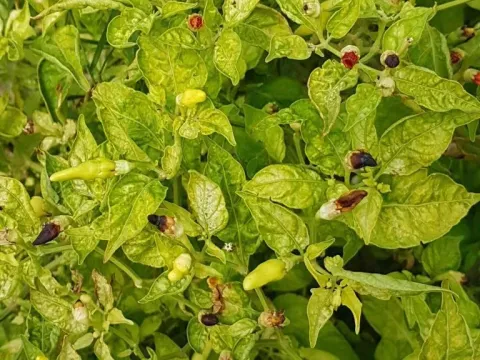
The most visible symptom is the development of a mosaic-like pattern on leaves, featuring a patchy distribution of light-green and dark-green tissues.
Leaves often exhibit severe deformation, becoming crinkled, curled, or elongated into a shoestring shape due to unequal growth rates caused by the virus.
Infected plants show stunted growth with shortened internodes, leading to a dwarf appearance that contrasts sharply with healthy surrounding plants.
Fruits are severely affected, showing yellow or green spotting, bumpy surfaces, and irregular shapes, which renders them unsalable in commercial markets.
As the disease progresses, systemic necrosis may occur, causing the premature senescence and yellowing of the foliage, which eventually leads to the plant's death.
The spread of Pepper mosaic is primarily driven by insect vectors such as aphids, thrips, and whiteflies, which transmit the virus while feeding on plant sap.
Temperature plays a crucial role in the development of the disease, with ranges between 22°C and 28°C being optimal for viral multiplication and symptom expression.
High humidity levels, especially in greenhouse environments, facilitate the reproduction of insect vectors, creating an environment ripe for epidemic outbreaks.
Mechanical transmission is a critical factor, as the virus can be easily spread through contaminated hands, pruning tools, and equipment used during field work.
A lack of crop rotation and the presence of weeds provide favorable conditions for the virus to survive and migrate to healthy pepper seedlings throughout the season.
The economic impact of Pepper mosaic is severe, as it causes significant reductions in marketable yield due to flower abortion and fruit deformities.
Infected crops suffer from reduced photosynthetic activity, leading to lower biomass, poor quality fruit, and decreased overall vigor of the plantation.
The disease is notoriously difficult to manage because there are no chemical cures for infected plants, often forcing farmers to remove and destroy entire sections of the crop.
The long-term presence of the virus in soil and local weeds creates a recurring cycle of infection, which can jeopardize the long-term viability of a farm.
Furthermore, the increased cost of managing insect vectors and implementing strict phytosanitary measures adds a significant burden to production expenses.
The most effective strategy for managing Pepper mosaic is the cultivation of resistant or tolerant pepper hybrids specifically bred to withstand common viral strains.
Maintaining strict hygiene protocols is essential, which includes disinfecting all tools with alcohol or bleach solutions between different parts of the field.
Integrated Pest Management (IPM) is necessary to keep insect populations, such as aphids and whiteflies, below the economic threshold through biological and chemical means.
- Prompt removal and destruction of symptomatic plants to eliminate the source of infection.
- Use of insect-proof netting in greenhouses to exclude vectors.
- Rigorous weed management in and around the growing area to remove virus reservoirs.
- Crop rotation with non-host plants to disrupt the viral life cycle.
While balanced fertilization and stress reduction help plants maintain better health, they cannot protect a crop once it has been systemically infected by the virus.