
Blind seed disease
Gloeotinia temulenta
The causal agent of this condition is the ascomycete fungus Gloeotinia temulenta. It is a highly specialized pathogen that specifically targets the reproductive structures of grasses and cereal crops.
What the section contains
Blind seed disease
The infection cycle begins during the flowering stage. Ascospores are discharged from fungal apothecia in the soil and are carried by air currents or rain splashes to the open florets of the plants.
Once the spores land on the stigma, they germinate and penetrate the developing ovary, eventually replacing the seed tissues with a dense, dark mass of fungal mycelium.
During the maturation process, the fungus produces secondary spores called conidia, which spread the disease rapidly among healthy plants within the field through insects or moisture.
At the end of the season, the fungus forms sclerotia. These structures are the overwintering stage of the pathogen, allowing it to persist in the soil or within harvested seed lots.
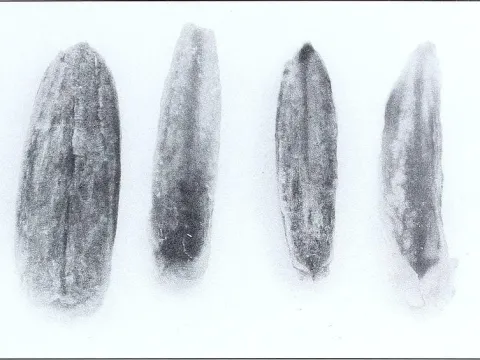
The most distinctive sign of blind seed disease is the presence of sclerotia in place of normal grain kernels. These appear as small, dark, hard bodies that occupy the floret.
During the early stages of infection, an exudate known as "honeydew" may appear on the heads of the grain, containing millions of conidia that facilitate the secondary spread of the disease.
Infected florets may show abnormal development, where the glumes remain slightly apart due to the irregular shape and size of the fungal sclerotia compared to healthy grains.
In many cases, external symptoms on the stem and leaves are absent, making it difficult to detect the infection until the crop is harvested and inspected for grain quality.
Because the sclerotia are similar in size and weight to healthy seeds, the disease often goes unnoticed in harvested grain, leading to contamination of seed stocks.
The development of the disease is strictly dependent on weather conditions during the crop's flowering phase. Cool, damp, and cloudy weather provides the ideal environment for infection.
High relative humidity is necessary for the germination of ascospores and the subsequent growth of the fungal mycelium within the vulnerable tissues of the flower.
The presence of insect vectors that visit the flowering heads significantly accelerates the transmission of conidia from infected plants to healthy ones throughout the field.
Poor field management, such as continuous cropping of susceptible varieties without rotation, allows the inoculum levels in the soil to build up over several years.
Frequent rainfall during the critical flowering period acts as a mechanical vector for spore dispersal, greatly increasing the risk of a widespread epidemic in the area.
The primary harm caused by Gloeotinia temulenta is the production of toxic alkaloids within the sclerotia, which are poisonous to both humans and livestock if consumed.
Livestock that ingest contaminated grain may suffer from neurological disorders, including lack of coordination, tremors, and in severe cases, even death, often referred to as "intoxication."
Economic losses are severe due to reduced crop yield, as the infected seeds are useless and cannot be processed for food or animal feed purposes.
The contamination of harvest batches creates massive logistical issues, requiring expensive cleaning and sorting processes to separate sclerotia from healthy grain.
Even if the grain is visually inspected, undetected traces of the fungus can cause significant regulatory and health problems for the farming enterprise and the food chain.
The use of certified, disease-free seed is the most effective preventative measure to ensure the pathogen is not introduced into new fields through planting.
Implementing a strict crop rotation cycle of at least two to three years helps to break the pathogen's life cycle, as sclerotia eventually lose viability in the soil.
Deep plowing after harvest is recommended to bury crop debris and sclerotia deep enough to prevent the formation of apothecia and the subsequent release of ascospores.
Effective weed control is essential, particularly targeting wild grass species that might serve as alternative hosts for the fungus during the off-season.
In high-risk areas, careful monitoring of weather patterns during the flowering stage allows farmers to make informed decisions about protective fungicide applications.