
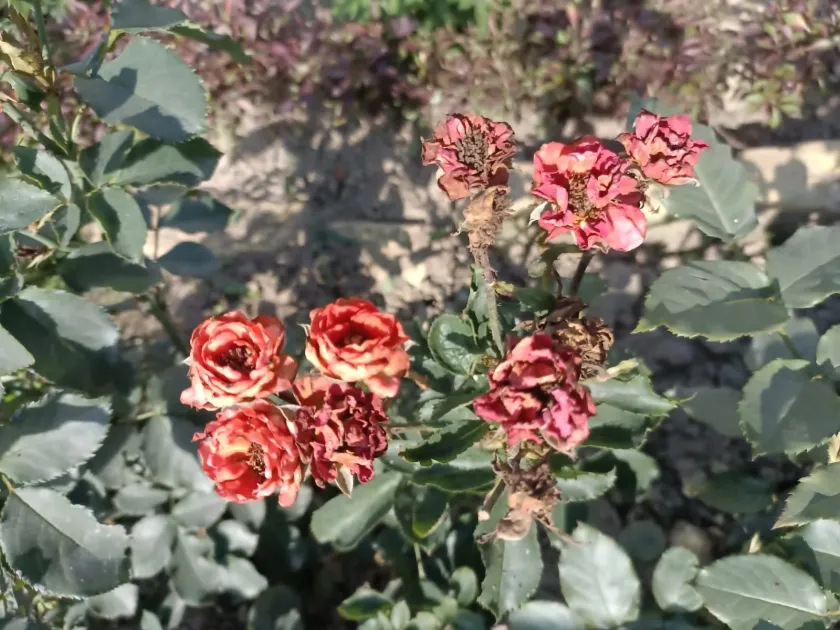
Description
Symptoms
The most common symptom is the mass yellowing and drying of flower buds, which drop prematurely before reaching full anthesis.
Flowers that have opened may wilt rapidly, showing brownish petal margins and dropping along with the entire pedicel shortly after.
Plants such as peppers exhibit noticeable daytime leaf wilting, a classic sign of the plant's inability to manage its internal water status under heat.
The absence of fruit development despite adequate flowering indicates that the pollination process has been unsuccessful or aborted.
At the point of abscission, a small necrotic layer or scar is visible, confirming the plant's physiological decision to detach the structure.
Pathogen
Blossom drop due to high temperatures is a physiological disorder rather than an infectious disease, caused exclusively by abiotic environmental conditions.
The primary mechanism involves the disruption of the plant's hormonal balance due to excessive thermal energy affecting internal metabolism.
When temperatures exceed critical thresholds (typically above +32°C), the synthesis and translocation of vital growth hormones are inhibited.
To ensure long-term survival, the plant prioritizes the preservation of its vegetative body, leading to the intentional shedding of reproductive structures.
This process is defined as heat-induced flower abortion, which effectively halts the fruit-setting cycle during extreme weather events.
Conditions for development
The condition develops when plants are exposed to prolonged daytime temperatures above +32°C and night temperatures exceeding +22°C.
Low relative humidity levels act as a compounding factor, drastically increasing transpiration rates and leading to tissue desiccation.
In greenhouses, poor ventilation and inadequate air circulation create microclimates that trap heat, worsening the thermal stress.
Irregular or insufficient irrigation prevents the plant from maintaining the necessary turgor pressure for cooling via transpiration.
Extended duration of high-temperature exposure prevents the plant from recovering during the night, leading to cumulative stress damage.
Why it matters
The primary economic impact is a significant yield reduction due to the loss of potential fruit-bearing organs during the peak flowering stage.
Heavy blossom drop forces the plant to divert energy back into vegetative growth, causing uneven fruit production and maturity delays.
Persistent thermal stress weakens the plant’s defense mechanisms, making it more susceptible to secondary pests and opportunistic diseases.
For commercial growers, this results in reduced harvest quality and quantity, necessitating costly remedial measures and management adjustments.
The inability to secure early fruit sets reduces the marketing value of the crop and shortens the overall profitable production window.
Protection
The most effective strategy involves implementing cooling measures, such as installing shade cloths to protect plants from direct radiation.
Improving greenhouse ventilation through automated roof vents and circulating fans is essential to prevent heat accumulation.
Consistent, deep irrigation during cooler hours ensures the plant has a sufficient water supply to maintain evaporative cooling.
Applying foliar sprays containing seaweed extracts, amino acids, or silicon can help bolster the plant's resilience against thermal stress.
- Selection of heat-tolerant crop varieties
- Mulching soil to stabilize root temperatures and moisture
- Using misting or fogging systems to lower air temperature
- Reducing nitrogen fertilization during extreme heat periods
Pathogens and affected parts
Affects crops · 1
Discussion
No discussions yet — be the first.