
Blister blight of tea
Exobasidium vexans
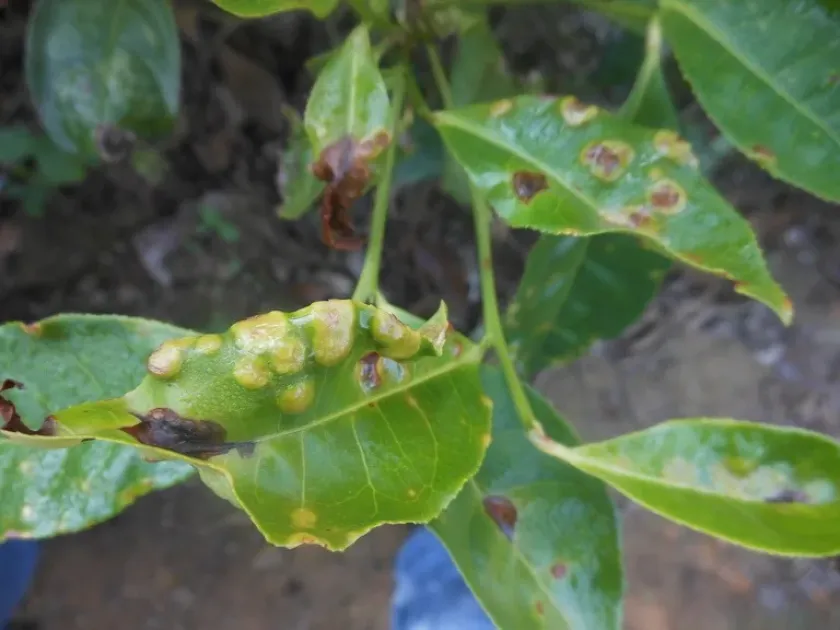
Description
Symptoms
The first symptoms appear on young leaves as small, translucent, or yellowish-green spots. As the infection progresses, these spots expand and become more clearly defined against the leaf surface.
A hallmark sign of the disease is the transformation of the leaf tissue into a raised, blister-like gall. The upper surface of the leaf becomes depressed, while the underside swells noticeably.
On the underside of the leaf, within the area of the blister, a white, velvety coating develops. This coating consists of the fruiting structures of the fungus, confirming the presence of the pathogen.
As the infection ages, the blisters turn brown or black, indicating tissue necrosis. Eventually, the dead tissue dries out and falls away, creating a shot-hole appearance on the foliage.
In severe cases, the infected shoots become stunted, twisted, and brittle. The overall canopy of the tea bush may show significant distortion, leading to substantial yield losses.
- Translucent, yellowish spots on young foliage.
- Formation of raised blister-like galls on leaves.
- White, velvety spore-bearing mats on leaf undersides.
- Necrosis and death of blistered tissue.
- Distortion and stunting of affected tea shoots.
Pathogen
The causative agent of the disease is the fungus Exobasidium vexans, which belongs to the Basidiomycota phylum. It is an obligate parasite that specifically targets the young, succulent tissues of the tea plant.
The fungus completes its life cycle on the tea plant, producing a distinct hymenial layer on the undersides of lesions. This layer releases spores that are dispersed by wind and splashing rain to infect new shoots.
Mycelium of the pathogen penetrates the intercellular spaces of the leaf, where it proliferates and extracts nutrients. This localized infection disrupts normal plant cell function, leading to the formation of the characteristic blisters.
The fungus survives in infected twigs and dormant buds during periods unfavorable for its development. It remains viable under cool and moist conditions, ready to re-emerge when the weather becomes suitable.
Infection is most aggressive in young flushing shoots. The softer cell walls of these tissues allow for easier penetration by fungal germ tubes compared to more mature, lignified plant parts.
Conditions for development
Blister blight is highly dependent on environmental conditions, particularly high humidity. Fog, mist, and light rain are critical for spore germination and successful penetration of the leaf tissue.
The optimal temperature for Exobasidium vexans ranges between 18°C and 25°C. Temperatures exceeding 30°C significantly inhibit the pathogen's activity, making summer heat a natural suppressive factor.
Dense planting patterns that restrict airflow create microclimates conducive to disease spread. Poor ventilation prevents leaves from drying quickly, allowing the pathogen more time to infect the plant.
Shaded areas within tea estates are particularly vulnerable. Sunlight is detrimental to the survival of spores, so areas with low light exposure often exhibit higher disease incidence.
Nitrogen-rich fertilizers can exacerbate the disease by promoting rapid, succulent growth of young tea shoots. This influx of fresh tissue provides an ideal substrate for the fungus to establish itself.
Why it matters
Blister blight is a major economic threat to the global tea industry. The infection renders the tender tea leaves unsuitable for manufacturing, significantly reducing the marketable yield.
Persistent infection leads to premature defoliation, which severely weakens the plant. A weakened tea bush is more susceptible to environmental stress and other secondary pests or diseases.
Long-term infestation drains the carbohydrate reserves of the tea plant, lowering the overall productivity of the plantation for subsequent seasons.
The photosynthetic capability of the tea bush is drastically reduced due to the extensive damage to the leaf area. This negatively impacts the biochemical profile of the tea, degrading the quality of the final product.
The cost of implementing management programs, including protective fungicide applications, adds significant overhead to tea production, often forcing producers to seek more sustainable solutions.
Protection
Effective management begins with proper cultural practices. Regular pruning is essential to improve airflow and light penetration within the tea bush canopy, which keeps foliage drier.
Choosing appropriate sites for new tea plantations is crucial to avoid low-lying areas where moisture and fog tend to accumulate. Strategic layout helps in long-term disease prevention.
Monitoring the plantation during favorable disease weather is necessary for early detection. Prompt removal and destruction of infected shoots can prevent localized infections from spreading into epidemics.
Fungicide application should be performed strategically based on disease forecasting. Using a mix of systemic and contact fungicides helps manage the infection while minimizing the risk of resistance.
Breeding and planting resistant cultivars is the ultimate goal for sustainable tea production. Resistant tea varieties significantly reduce the reliance on chemical control methods and ensure stable yields.
Discussion
No discussions yet — be the first.