
Blood red webcap
Cortinarius sanguineus
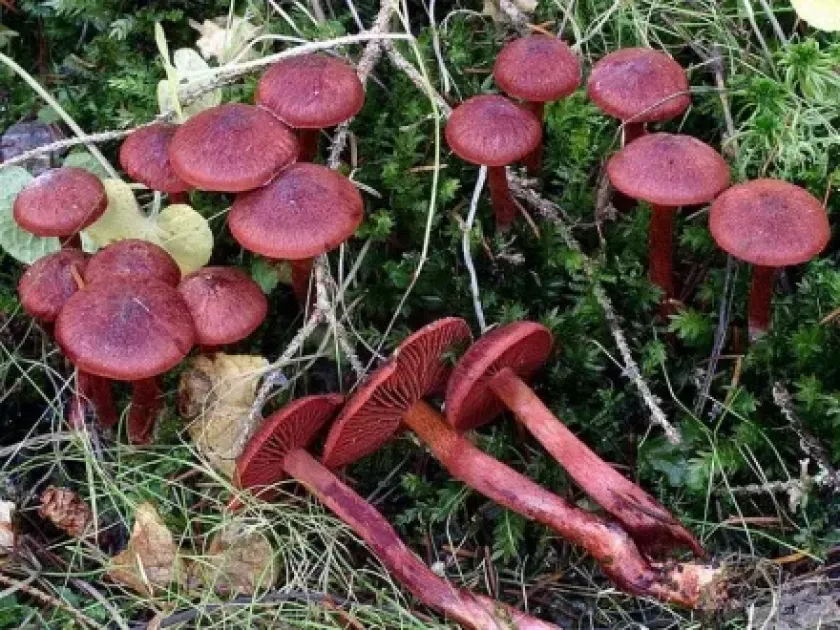
Description
Pathogen
The Blood red webcap (Cortinarius sanguineus) is a basidiomycete fungus belonging to the Cortinariaceae family. It is not a plant pathogen but a significant mycorrhizal fungus.
This fungus establishes a mutualistic relationship with the root systems of forest trees, specifically conifers, providing the host with nutrients.
Its distinct red pigmentation is derived from anthraquinone derivatives, which also exhibit antifungal properties in the soil environment.
The mycelium network thrives in leaf litter and topsoil, creating a complex connection with tree roots without causing structural damage to the host.
It acts as an ecological indicator of a healthy, undisturbed forest soil environment rather than a source of plant disease.
Conditions for development
Growth conditions for Cortinarius sanguineus require high humidity and consistent moisture within the leaf litter layer.
The species prefers acidic soil environments, which are typical for coniferous forest habitats where it is most commonly found.
Moderate temperatures ranging from 15°C to 20°C during the late summer and autumn season facilitate the emergence of fruit bodies.
Disturbance of the canopy or intensive soil cultivation significantly disrupts the delicate mycelial network of the fungus.
Successful development of the fungus relies heavily on the age and vigor of the host trees, as it depends on them for sugar transfer.
Why it matters
There is no economic or agronomic harm associated with this fungus, as it does not infect or damage agricultural crops.
The fungus is inedible and contains toxins, posing a risk only if ingested by humans or animals.
It does not cause root rot, vascular wilt, or any other pathological condition in plants.
In forest ecosystems, its presence is beneficial for nutrient cycling and the overall health of tree stands.
Farmers do not need to implement any strategies to manage this fungus, as it does not compete with crop production.
Protection
Control measures are unnecessary since the Blood red webcap is a beneficial mycorrhizal partner in forest ecosystems.
Standard fungicide applications used in commercial agriculture effectively eliminate this fungus from the soil as a byproduct of the treatment.
If management is desired in specific landscaping, simple soil drainage improvement and pH adjustment will inhibit its growth.
No biological or chemical pesticides are required specifically for this non-pathogenic species.
Maintenance of healthy soil structures and avoiding over-application of synthetic nitrogen helps manage its presence naturally.
Discussion
No discussions yet — be the first.