

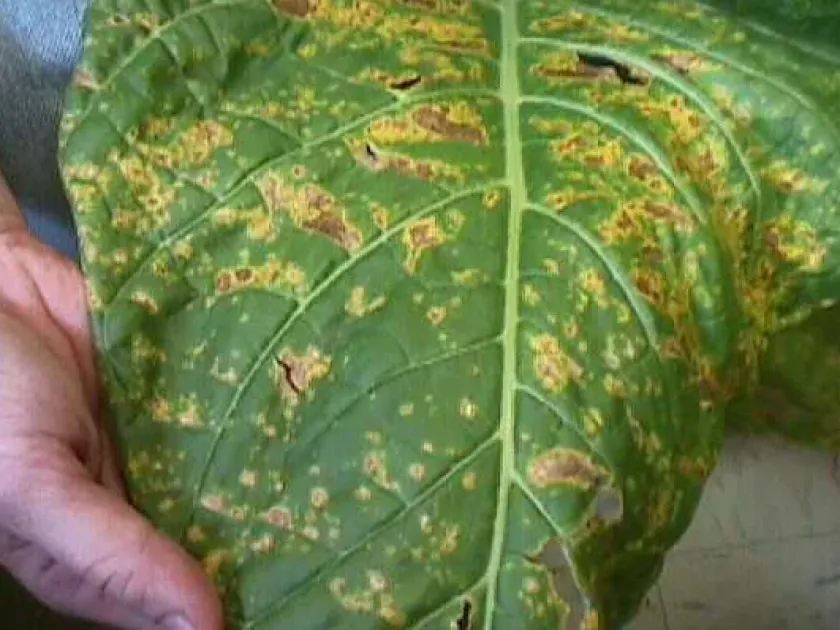
Description
Symptoms
The primary symptom is a mosaic pattern on the leaves, characterized by alternating light and dark green patches, often accompanied by leaf crinkling.
Infected plants exhibit stunted growth, reduced leaf size, and sometimes a distorted, needle-like shape of the leaves, known as shoe-stringing.
Fruits produced by infected plants often show mottling, necrotic spots, or uneven ripening, which renders them unsellable in a commercial market.
Advanced stages of infection may result in the yellowing of the entire foliage, curling of leaf margins, and overall physiological decline of the plant.
The severity of the symptoms depends on the host plant's age, the specific strain of the virus, and the environmental conditions present during the infection.
Pathogen
The disease is caused by the Tobacco mosaic virus (TMV), the type species of the Tobamovirus genus, known for its extraordinary stability and longevity.
The virus is a rod-shaped particle containing RNA, which allows it to remain infectious for years in dried leaves, contaminated soil, or on various surfaces.
It is remarkably resistant to high temperatures, environmental stressors, and common disinfectants, making it a persistent threat in agricultural settings.
Transmission occurs primarily through mechanical injury, such as handling plants, pruning, or the contact of infested plant debris with healthy tissue.
There is no specific insect vector for this virus, which differentiates it from many other plant diseases and emphasizes the role of human activity in spreading it.
Conditions for development
High temperatures, especially those above 25°C, are often conducive to the expression of disease symptoms and rapid replication of the virus within the host.
Crowded planting conditions facilitate the transmission of the virus through physical contact between the leaves of neighboring healthy and infected plants.
Stressful conditions, such as improper water management or nutrient imbalances, can make host plants more susceptible to developing severe viral symptoms.
The introduction of the virus usually occurs through contaminated seeds or through handling plants after using tobacco products, which can carry the virus.
Inadequate hygiene practices during greenhouse operations, such as reusing non-sterilized pots or tools, serve as major pathways for disease dissemination.
Why it matters
Tobacco mosaic virus poses a significant risk to various high-value crops, including tomatoes, peppers, eggplants, tobacco, and several ornamental flowers.
The physiological impact involves reduced photosynthesis and nutrient uptake, leading to a substantial decrease in fruit yield and poor plant health.
Economic losses are often total for affected greenhouse sections because there is no cure once a plant is infected with this systemic virus.
The virus significantly weakens the plant's natural defense systems, making it more prone to secondary infections from other pathogens like fungi and bacteria.
Global trade and local production can suffer due to stringent quarantine measures required to control the spread of TMV in commercial operations.
Protection
The most effective strategy is the use of resistant crop varieties, which are specifically bred to withstand or tolerate infection by common strains of TMV.
Rigorous sanitation measures are mandatory, including regular washing of hands and tools with a 10% bleach solution or phosphate-based cleaners.
Seed treatment using trisodium phosphate or heat treatment can help eliminate the virus from the surface of the seed before planting.
Early identification and rogueing of infected plants are essential to prevent the spread of the virus to the remainder of the crop population.
- Implementation of strict greenhouse hygiene.
- Crop rotation to avoid soil-borne virus remnants.
- Avoidance of tobacco use by personnel near crops.
- Use of certified, virus-free seeds and transplants.
Content graph
Connections · Tobacco mosaic
Most often together:
Marketplace
Products · 10





Community
Discussion
No discussions yet — be the first.