

Reference · Crops
Tobacco
Nicotiana L.
Tobacco seeds are exceptionally small, requiring specialized nursery techniques for sowing. Direct seeding in the field is rarely viable, making transplanting the standard approach for commercial production.
7
items
What the section contains
 Tobacco
Nicotiana tabacum L.
61 products
Tobacco
Nicotiana tabacum L.
61 products
 Aztec tobacco
Nicotiana rustica L.
Aztec tobacco
Nicotiana rustica L.
 Flowering tobacco
Nicotiana alata Link & Otto
Flowering tobacco
Nicotiana alata Link & Otto
 Fragrant tobacco
Nicotiana suaveolens Lehm.
Fragrant tobacco
Nicotiana suaveolens Lehm.
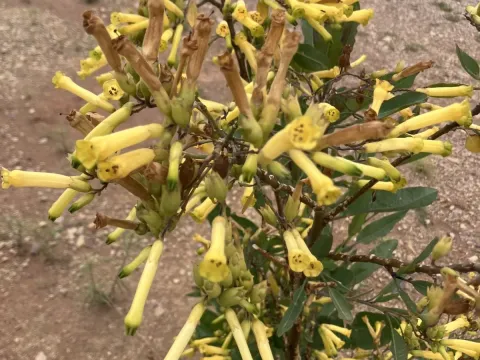
 Nicotiana glauca
 Graham
Nicotiana glauca
Nicotiana glauca Graham
 Sander tobacco
Nicotiana x sanderae W. Watson
Sander tobacco
Nicotiana x sanderae W. Watson
 Tobacco and rustica hybrids
hybrids between Nicotiana rustica L. and Nicotiana tabacum L.
Tobacco and rustica hybrids
hybrids between Nicotiana rustica L. and Nicotiana tabacum L.
Marketplace
Products in this section · 12


Tobacco
Seedlings are typically started in greenhouses or protected beds 45–60 days before the projected last frost date. This ensures plants are well-established and ready for transplantation when soil temperatures rise.
The substrate for seedlings should be sterile, well-draining, and rich in organic matter. Maintaining a constant moisture level is crucial, as the tiny seeds can easily desiccate if the surface dries out.
Acclimatization of seedlings, known as hardening off, is a mandatory phase before field transplanting. This involves gradually exposing the plants to lower temperatures and reduced watering to improve survival rates.
Transplanting is carried out when the soil temperature consistently reaches 15 degrees Celsius. This promotes rapid root establishment and minimizes transplant shock in the young tobacco plants.
Tobacco (Nicotiana L.), a member of the Solanaceae family, is a sun-loving crop that demands warm climates. It thrives best in regions with long growing seasons and high cumulative heat units.
The plant requires well-drained, sandy loam soils. Heavy, clay-rich soils are generally avoided as they impede root development and increase the risk of waterlogging and subsequent root diseases.
Adequate sunshine is essential for the development of quality leaves. Tobacco is a long-day plant; therefore, light intensity significantly influences the chemical composition and aroma of the cured leaf.
Nutrient management focuses on balanced fertilization. High potassium levels are preferred as they improve the burn quality and flavor, while excessive nitrogen can lead to harsh, poor-quality leaf characteristics.
While tobacco requires consistent moisture, excessive rainfall near the harvest period is detrimental, as it dilutes the essential oils and resins that define the leaf quality.
The yield of cured tobacco leaves varies significantly based on variety, climate, and management intensity. Average yields range from 1.5 to 3 metric tons per hectare under standard cultivation practices.
Optimal plant density is vital for maximizing biomass. Depending on the variety, growers typically plant between 40,000 to 70,000 plants per hectare to ensure efficient resource utilization.
Topping (removing the flower head) and desuckering (removing lateral shoots) are essential practices. These actions redirect nutrients to the leaves, significantly increasing their size and quality.
Field maintenance, including regular inter-row cultivation, suppresses weeds and improves soil aeration, allowing the root system to expand effectively during the peak growth phase.
Crop rotation remains the best strategy for maintaining yield levels. Avoiding continuous tobacco planting on the same site prevents the buildup of soil-borne pathogens and nutrient depletion.
Blue mold (Peronospora tabacina) is the most devastating disease for tobacco crops, especially in humid conditions. It can spread rapidly, causing significant yield losses if not managed promptly.
Tobacco Mosaic Virus (TMV) is a highly persistent pathogen. Prevention relies on strict field sanitation, as the virus can survive in plant debris and be easily transmitted by human contact.
Tobacco thrips and aphids are the primary insect pests. Beyond direct feeding damage, they are major vectors for various viral diseases, making insect control a top priority in agronomic plans.
Damping-off diseases are common in seedling beds if humidity is too high. Proper ventilation and sterile growing media are critical to ensuring the survival of the transplant material.
- Use of disease-resistant cultivars
- Integrated Pest Management (IPM)
- Proper weed control
- Field sanitation protocols
Tobacco harvesting is a precise task performed through "priming," which involves picking leaves manually as they reach maturity, starting from the bottom of the stalk and moving upwards.
Maturity is indicated by a color shift from deep green to a lighter, yellow-green hue, accompanied by a slight drooping of the leaf and the presence of sticky trichomes on the surface.
Once harvested, the leaves undergo curing. This process involves controlled wilting, which reduces moisture content and initiates the breakdown of starches into sugars and other compounds.
Curing methods vary (air, flue, or sun curing) based on the intended use of the tobacco. This stage is crucial for developing the final color, texture, and aroma of the product.
After curing, the leaves are fermented. Fermentation stabilizes the product, mellows the harsh flavors, and develops the final desired characteristics for the tobacco industry.