
Reniform nematode
Rotylenchulus reniformis
Description
How to identify
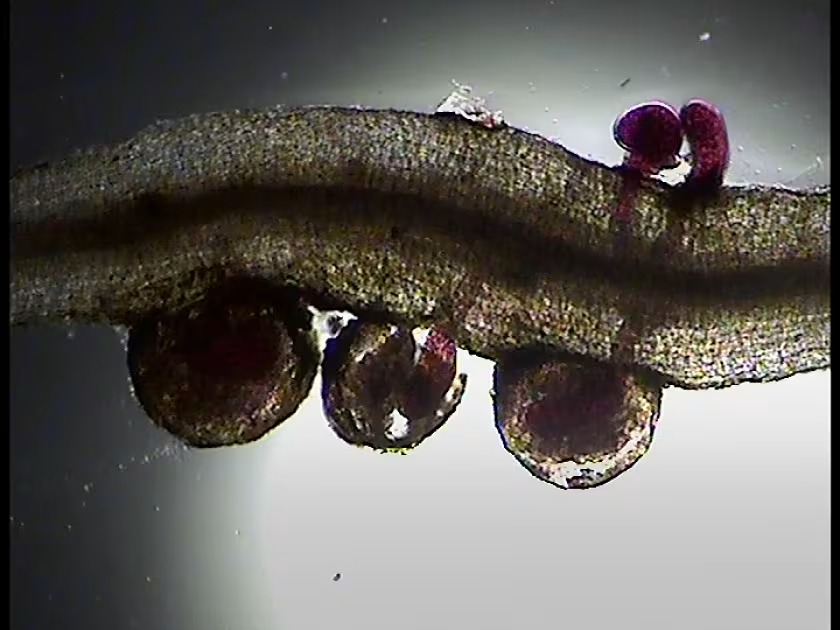
The reniform nematode, Rotylenchulus reniformis, belongs to the family Hoplolaimidae. It is named for the distinctive kidney shape of the mature, sedentary female, which is the primary form that attaches to the plant roots for long-term feeding.
This species is a tropical and subtropical pathogen that has successfully spread to many warm temperate regions. It is characterized by a wide host range, including cotton, pineapple, soy, and various vegetable crops, making it a globally significant pest.
The life cycle is unique among plant-parasitic nematodes. Only the immature vermiform female is capable of infecting host roots. Once she begins feeding on the endodermis, she remains sedentary for the rest of her life, forming a specialized feeding site.
Reproduction occurs primarily through mitotic parthenogenesis, allowing populations to multiply rapidly when conditions are favorable. Males do not feed and are only involved in mating, which is not strictly necessary for population expansion in some environments.
Detection requires laboratory processing of soil and root samples. Because the sedentary females are embedded in root tissue, simple soil extraction methods may not reveal the full extent of the infestation without root analysis.
What it damages
Rotylenchulus reniformis is a serious threat to agriculture, causing significant yield losses in crops like cotton and sweet potatoes. Its ability to create permanent feeding sites results in the massive depletion of the host plant’s resources.
The nematode damages the root system by inducing the formation of giant cells, which function as metabolic sinks. This interferes with the plant's ability to transport water and essential nutrients, leading to stunted growth and reduced vigor.
Plants infested with this nematode are highly susceptible to secondary pathogens. Infections by Fusarium oxysporum often increase in severity on plants weakened by nematode feeding, leading to systemic vascular diseases.
In the field, damage typically presents as patchy, stunted areas rather than uniform decline. This is due to the soil-borne nature of the nematode and its tendency to aggregate in areas with optimal soil moisture and temperature.
Economic impact is not limited to biomass loss. In tuber and root crops, the nematode causes external blemishes and internal deformities, which directly decrease the market value of the harvested produce.
Signs of infestation
Early signs of infection are often non-specific and easily mistaken for nutrient deficiency. Infected plants frequently exhibit chlorosis, slow development, and delayed maturity, which can be misdiagnosed by untrained observers.
Under heat stress, infested plants show distinct wilting symptoms more rapidly than healthy ones. This occurs because the damaged, reduced root system cannot supply enough water to the foliage during periods of high transpiration.
Microscopic observation of roots often reveals brown lesions or necrotic spots where the nematodes have penetrated. In severe cases, the presence of the sedentary females can be confirmed by staining the roots with acid fuchsin.
Below-ground, there is a lack of fine root development. The overall root architecture is compromised, showing poor branching and a general reduction in total root mass, which severely limits the plant's capacity for nutrient uptake.
In mature crops, overall yield reduction is the ultimate sign of a successful infestation. When harvest yields are consistently low despite adequate fertilization, it is a strong indicator that Rotylenchulus reniformis may be the hidden cause.
Control measures
Crop rotation with non-host plants is the most sustainable approach to managing reniform nematode populations. Utilizing crops like corn, sorghum, or certain grasses can effectively break the life cycle of the nematode in the soil.
Chemical control involving soil fumigants or nematicides is used in intensive production systems. However, application must be precisely timed and regulated to minimize environmental impact and ensure cost-effectiveness.
The development and use of resistant cultivars is a key component of modern integrated pest management. Resistance genes are being bred into major crops to prevent the nematode from establishing successful feeding sites.
Biological control methods, such as the use of nematophagous fungi or soil-beneficial bacteria, are gaining popularity. These agents can colonize the rhizosphere and naturally suppress the nematode population without harmful residues.
Strict phytosanitary practices are essential to prevent the spread of the nematode to uninfested land. This includes cleaning farm equipment, using clean nursery stock, and managing irrigation water to avoid the transport of infested soil particles.
Causes diseases · 2
Discussion
No discussions yet — be the first.