
Rotylenchulus
Rotylenchulus
Description
How to identify
Rotylenchulus is a genus of plant-parasitic nematodes within the family Hoplolaimidae. The most economically significant species is Rotylenchulus reniformis, commonly known as the reniform nematode.
These nematodes are microscopic soil-dwellers. They are classified as sedentary semi-endoparasites, meaning the female nematode penetrates the root cortex and remains in a fixed feeding position.
The name reniform refers to the kidney-shaped body of the mature female, which is the stage most commonly identified in laboratory diagnostics of infected root tissue.
The life cycle involves several larval stages. Only the mature females are parasitic; the males are non-feeding and often found in the surrounding soil profile.
Systematic classification places them within the order Rhabditida. Their biology is highly adapted to persistence in soil, making them a difficult pest to manage in many subtropical regions.
What it damages
Rotylenchulus species cause significant damage to a wide range of important crops, including cotton, soybeans, sweet potatoes, and numerous vegetables and tropical fruits.
By establishing a permanent feeding site in the root, the nematode induces the formation of multinucleate "giant cells" that siphon nutrients away from the host plant's vital systems.
Damage to the root system restricts water and nutrient uptake, leading to reduced plant vigor, stunting, and significantly lower yields in infested fields.
In cotton production, the reniform nematode is considered one of the most destructive pests, capable of causing substantial economic losses in both yield and fiber quality.
Infestation often facilitates the entry of soil-borne fungi and bacteria, which can lead to complex disease scenarios where root rot becomes the dominant issue.
Signs of infestation
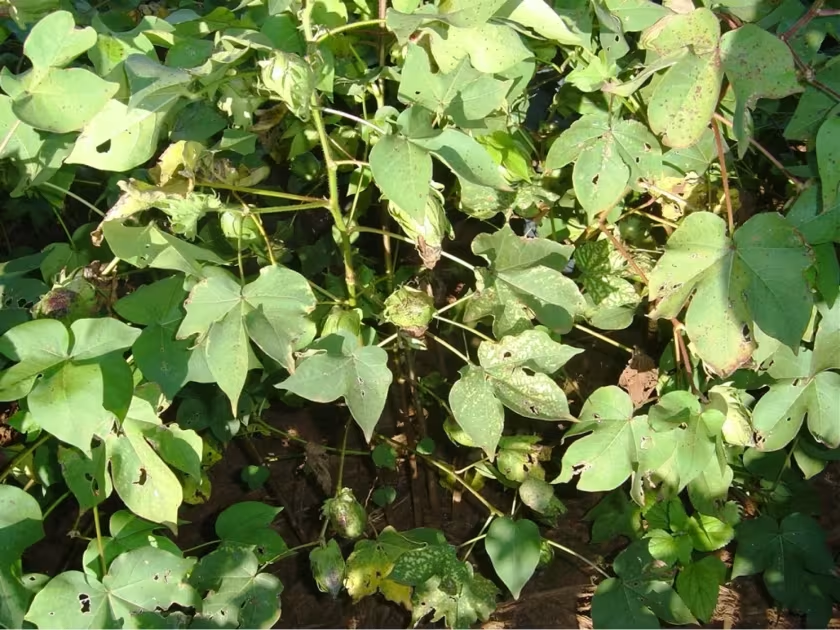
Infestation symptoms in the field are rarely uniform. Affected areas typically exhibit patchy stunting and chlorosis, where patches of plants appear significantly smaller than their healthy counterparts.
Above-ground symptoms often mimic nutrient deficiencies, such as yellowing of the foliage and delayed maturity, resulting from the compromised state of the root system.
When examining the root system of affected plants, one may observe reduced root mass, poor branching, and occasional necrosis depending on the intensity of the nematode infection.
During dry spells, plants infested by Rotylenchulus show signs of wilting earlier than non-infested plants due to the impaired root system's reduced efficiency.
Diagnosis requires sampling soil and root tissue for laboratory analysis, as visual observation in the field cannot confirm the presence of these microscopic pests.
Control measures
Integrated Pest Management (IPM) is essential. Crop rotation with non-host crops is a primary cultural practice used to suppress nematode population densities over time.
The development and utilization of nematode-resistant crop varieties represent the most effective and sustainable strategy for managing Rotylenchulus populations in large-scale agriculture.
Chemical control involving soil fumigation or the application of nematicides may be necessary in high-pressure situations, though these methods are costly and subject to strict regulation.
Strict sanitation protocols must be enforced to prevent the spread of infested soil via farm machinery, equipment, and contaminated nursery stock to uninfested production areas.
Biological control agents, including various species of fungi and beneficial bacteria that prey on or parasitize nematodes, are being actively researched as components of sustainable nematode management.
Causes diseases · 2
Discussion
No discussions yet — be the first.