
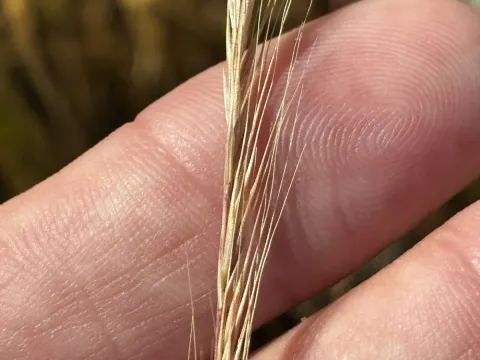
Festuca megalura
Festuca megalura
Festuca megalura is an annual grass that thrives in regions where seasonal moisture availability aligns with its biological growth cycle. The primary sowing window is typically in the early autumn, allowing the plants to establish a root system before the onset of the colder season.
What the section contains
Festuca megalura
Successful germination requires precise depth control; seeds should be placed no deeper than 1-2 centimeters in well-prepared, firm soil. Broadcasting on the surface followed by light harrowing is a common practice to ensure proper seed-to-soil contact.
Optimal planting density is essential for weed suppression and maximizing early-season biomass production. Farmers should adjust seeding rates based on soil fertility levels and expected moisture, generally aiming for a uniform cover to protect against surface erosion.
In Mediterranean-type climates, moisture from autumn rains is the key trigger for seed germination. Farmers must monitor weather patterns closely to ensure that the sowing process takes advantage of the first significant rainfall events of the season.
Spring sowing is less common and usually only viable in temperate or cooler regions with reliable spring rains. In such environments, the plant focuses on rapid vegetative growth before shifting into its reproductive phase as temperatures increase.
As a member of the Poaceae family, Festuca megalura is highly adaptable to a variety of soil types, including sandy, loamy, and nutrient-poor soils. It is particularly valued for its ability to persist in environments where more demanding crops would fail.
This grass prefers well-drained soils and shows a clear sensitivity to waterlogged conditions, which can inhibit root respiration. It exhibits a high degree of drought tolerance, allowing it to complete its life cycle before the onset of intense summer heat.
It thrives in full sunlight, which is necessary for vigorous tillering and robust biomass development. While it is not a heavy feeder, basic nitrogen availability during the early growth stages significantly enhances the overall yield potential of the pasture.
Soil pH levels ranging from neutral to slightly acidic are considered ideal for this species. It has shown excellent resilience to poor soil structure and is frequently utilized in restoration projects to stabilize exposed or degraded land surfaces.
Proper management of the grazing intensity is a crucial requirement for maintaining healthy stands. Overgrazing can deplete the seed bank, whereas moderate use supports natural reseeding and the longevity of the pasture in extensive livestock systems.
The primary agricultural utility of Festuca megalura is as a reliable forage source in early spring. Livestock producers utilize this grass to provide high-quality green feed during the gap between winter dormancy and the peak of the permanent pasture season.
Biomass production is highly variable and depends largely on the amount of accumulated rainfall during the winter and early spring months. Under favorable conditions, it provides a high-protein feed that is readily consumed by cattle and sheep.
The nutritional profile is highest during the vegetative stage, characterized by high digestibility and energy content. As the plant transitions to the flowering stage, lignification of the stalks occurs, which reduces its overall forage value for livestock.
When grown in mixtures with forage legumes, Festuca megalura contributes to a more balanced nutrient intake and better overall soil health. This synergy also helps in distributing the grazing pressure more evenly across the field.
The yield of seed is often a secondary objective for growers who wish to maintain self-sustaining stands. Harvesting should be carefully timed to ensure maximum seed maturity while preventing significant seed shatter in the field.
The species is susceptible to various fungal pathogens, with rust diseases being the most common threat in humid or cool, wet weather. These pathogens can significantly reduce the photosynthetic capacity of the leaves, thereby stunting overall plant growth.
Insects such as aphids are frequent pests that damage the plant by extracting sap and potentially spreading viral pathogens. Regular scouting is recommended to identify early infestations and prevent significant population spikes during the growing season.
Root rots can become a concern in poorly managed soils or areas prone to compaction. Maintaining soil porosity and avoiding waterlogging are the most effective cultural strategies to mitigate these risks without the need for chemical intervention.
Competition from invasive weeds during the establishment phase is another major risk factor. Effective weed control measures or proper grazing management can keep the stand productive and prevent the encroachment of undesirable vegetation.
- Cereal Rusts
- Powdery Mildew
- Cereal Aphids
- Root Rot pathogens
- Grass Thrips