
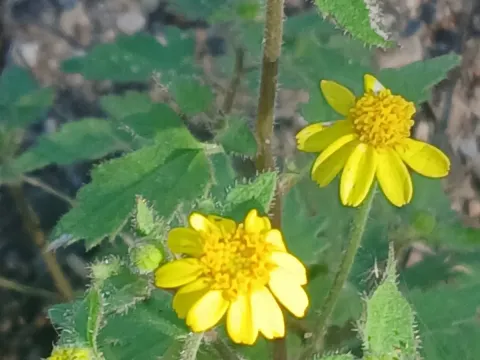
Perityle
Perityle
Perityle is a genus of flowering plants belonging to the Asteraceae family. Native primarily to the arid, mountainous, and desert regions of the Southwestern United States and Mexico, these plants are well-adapted to harsh environmental conditions.
What the section contains

Perityle
The core requirement for successful cultivation is excellent soil drainage. In cultivation, these plants thrive in gritty, sandy, or rocky soil mixes. They are highly susceptible to root rot if kept in waterlogged conditions, making drainage the most critical factor for survival.
These plants are highly heat-tolerant and flourish in full sun exposure. They are quintessential xeriscaping subjects, meaning they require minimal supplemental water once established, relying instead on natural precipitation and deep, infrequent irrigation.
Regarding soil fertility, Perityle does not require rich, nutrient-dense organic soils. In fact, over-fertilization can lead to weak, leggy growth rather than the desired compact, flowering habit characteristic of the species in the wild.
In terms of agricultural use, Perityle is strictly an ornamental crop. It is highly valued in rock garden designs and low-water landscape installations where its resilience to drought and heat makes it a reliable perennial choice.
Root rot is the most significant threat to the genus. It is typically caused by poor soil drainage or excessive irrigation frequency. Ensuring a fast-drying growing medium is the primary method of preventing these fungal-based losses.
Spider mites are common pests that thrive in the hot, dry environments that Perityle prefers. Regular monitoring of the foliage for webbing or stippling is advised, especially during peak summer temperatures.
Powdery mildew can occur if air circulation is insufficient. High humidity levels, combined with stagnant air, create the perfect conditions for this pathogen, often appearing as a white, dusty film on leaves.
Mealybugs can also infest the plants, particularly in protected or nursery settings. Early detection is essential, as these pests can quickly multiply and weaken the plant structure by sucking sap from the stems.
Root nematodes can occasionally pose a risk if the soil has not been properly sterilized or if the plants are grown in contaminated nursery pots. Utilizing high-quality, sterile potting components is a standard preventative practice.