
Paper bush
Edgeworthia tomentosa
Description
Growing requirements
Paper bush, or Edgeworthia tomentosa, is a deciduous shrub belonging to the Thymelaeaceae family. Originating from the mountainous regions of China and the Himalayas, it is highly valued for both its ornamental flowers and its strong, fibrous bark.
The plant thrives in partial shade, mimicking its natural woodland habitat. Protection from strong, drying winds and excessive direct sunlight is essential for maintaining optimal leaf health and preventing moisture loss during hot summers.
For successful cultivation, the soil should be rich, well-draining, and slightly acidic. Proper drainage is critical; the plant is highly susceptible to root rot if left in waterlogged conditions, particularly during the dormant winter months.
Edgeworthia requires consistent moisture levels during the growing season. Applying organic mulch around the base of the shrub helps regulate soil temperature and ensures that the shallow root system remains adequately hydrated.
Temperature tolerance is a limiting factor for this species, as it prefers mild, frost-free climates. In regions with harsh winters, it must be grown in containers and moved to a sheltered environment to prevent irreversible freeze damage.
Harvesting
The primary agricultural utility of Edgeworthia lies in its bark, which serves as a premium raw material for traditional papermaking. Harvest typically occurs during the dormant season, which allows for easier processing and fibre extraction.
The stems are harvested, bundled, and subjected to steaming or boiling, a process that softens the outer bark layers. This allows for the separation of the inner phloem fibres, which are prized for their exceptional strength and flexibility.
The resulting paper is renowned for its durability, resistance to yellowing, and high-quality surface. It is extensively used in high-end calligraphy, artistic stationery, and the preservation of historical artifacts.
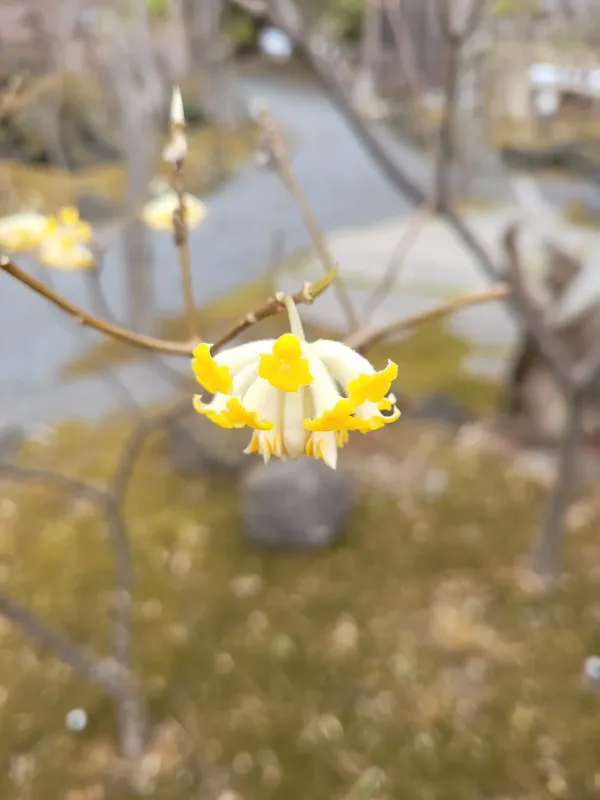
Beyond its fibre production, the plant is a significant asset in landscaping. Its fragrant, tubular yellow flowers appear on bare branches in late winter, providing early-season interest when most of the garden is still dormant.
Sustainable harvesting involves selective pruning, which encourages the growth of vigorous new shoots from the base. This practice not only sustains the plant's health but also ensures a consistent annual yield of high-quality raw material.