
Neapolitan Daphne
Daphne neapolitana
Description
Growing requirements
Neapolitan Daphne (Daphne neapolitana) is an evergreen or semi-evergreen shrub belonging to the Thymelaeaceae family. Originally native to the mountainous regions of Southern Italy, this plant is valued for its compact growth habit and highly fragrant spring blossoms.
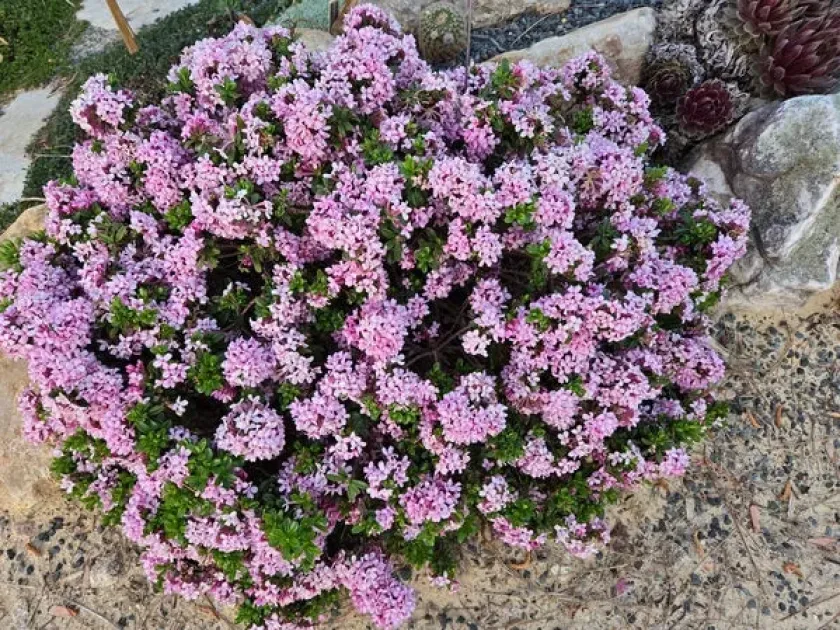
Botanically, this shrub is characterized by its small, lanceolate leaves and dense clusters of pink to purple flowers. It is an excellent choice for rock gardens and small borders, provided the specific environmental needs are met for its successful establishment.
The plant requires well-drained, neutral to slightly acidic soil. It is notoriously sensitive to waterlogged conditions, which can quickly lead to root rot; therefore, providing a rocky or well-amended substrate is essential for healthy long-term growth.
Regarding climate, Daphne neapolitana prefers locations with partial shade or protection from the hottest afternoon sun. While it can withstand moderate cold, it benefits from a layer of mulch in colder regions to protect the shallow root system from extreme fluctuations.
Cultural practices are relatively straightforward, focusing on minimal pruning to maintain shape and occasional supplemental watering during prolonged dry spells. Using a balanced, slow-release fertilizer in early spring helps support optimal flower development and overall vigor.
Main diseases and pests
Root rot caused by fungal pathogens is the most significant threat to the survival of the plant. This condition is almost exclusively linked to overwatering or inadequate soil drainage, making moisture control the primary focus of preventative maintenance.
Pests like aphids and spider mites can occasionally affect the plant, particularly in sheltered or drought-stressed conditions. Early detection and the use of insecticidal soaps or horticultural oils are recommended to keep infestations from damaging the foliage.
All parts of the Neapolitan Daphne are toxic to humans and pets if ingested. Handling the plant requires care, specifically the use of gloves, to prevent skin irritation or accidental contact with the eyes when working with the sap.
Viral infections can manifest as mottled leaves or distorted growth patterns. Since there is no cure for such viruses, infected plants should be removed and disposed of carefully to avoid spreading the disease to other susceptible species in the garden.
Good air circulation is vital to prevent leaf-spot diseases and powdery mildew. Planting the shrub with adequate spacing ensures that moisture on the foliage evaporates quickly, significantly reducing the pressure from opportunistic fungal pathogens.