
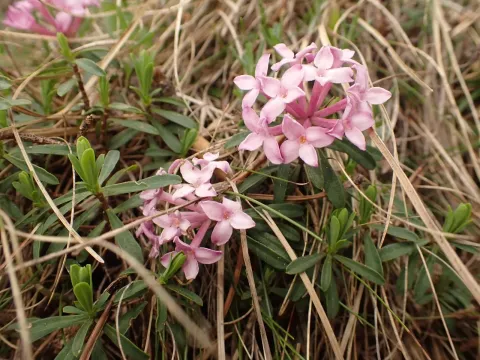
Striped daphne
Daphne striata
Striped daphne (Daphne striata) belongs to the Thymelaeaceae family. It is a slow-growing, low-lying shrub originating from the high-altitude regions of the Alps, where it thrives in rocky, calcareous alpine meadows.
What the section contains
Striped daphne
To cultivate this species, one must replicate its native conditions. The soil must be exceptionally well-drained and alkaline. High moisture retention in the soil is lethal to this plant, often causing root rot almost immediately.
Climate requirements include plenty of sunlight, but with protection from excessive heat during the summer months. It is an alpine plant, meaning it prefers cool, airy environments rather than humid or sweltering conditions.
Agronomic management involves minimal intervention. Periodic light watering is sufficient, ensuring the root zone never stays waterlogged. Fertilizer application should be minimal, as the plant is adapted to nutrient-poor rocky soils.
The primary use of this plant is ornamental. It is a prized specimen for rock gardens, alpine troughs, and botanical collections due to its fragrant, pinkish-purple flowers and resilient nature in alpine climates.
Root rot and fungal infections are the most significant threats to Daphne striata. These diseases are almost exclusively linked to improper drainage or irrigation practices that allow water to accumulate around the collar.
Pests such as aphids and spider mites can occasionally affect the foliage, particularly during dry, hot spells when the plant is stressed. Standard horticultural pest control methods are effective when applied early.
It is crucial to handle the plant with care, as all parts of the Daphne species are toxic to humans and pets. Always wear protective gloves when pruning or transplanting to prevent skin irritation.
Preventive maintenance includes keeping the base of the shrub free of rotting organic matter and weeds. Ensuring good airflow around the plant helps reduce the risk of mold and fungal spores taking hold.
Since the plant is inherently slow-growing, any severe damage from pests or disease can take years to recover from. Therefore, a proactive approach to plant health is essential for maintaining a beautiful specimen.