
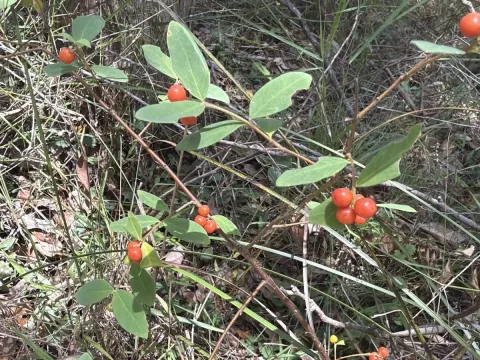
Wikstroemia
Wikstroemia
Wikstroemia, a genus in the Thymelaeaceae family, is typically propagated through seed germination or stem cuttings in specialized nursery settings.
What the section contains
 Indian string bush
Wikstroemia indica
Wikstroemia androsaemifolia
Wikstroemia androsaemifolia
Indian string bush
Wikstroemia indica
Wikstroemia androsaemifolia
Wikstroemia androsaemifolia
 Wikstroemia canescens
Wikstroemia canescens
Wikstroemia canescens
 Wikstroemia chamaedaphne
Wikstroemia chamaedaphne
Wikstroemia chamaedaphne
 Wikstroemia ganpi
Wikstroemia ganpi
Wikstroemia ganpi
 Wikstroemia phillyreifolia
Wikstroemia pilosa
Wikstroemia pilosa
Wikstroemia phillyreifolia
Wikstroemia phillyreifolia
Wikstroemia pilosa
Wikstroemia pilosa
 Wikstroemia sikokiana
Wikstroemia sikokiana
Wikstroemia sikokiana
 Wikstroemia trichotoma
Wikstroemia trichotoma
Wikstroemia trichotoma
 Wikstroemia uva-ursi
Wikstroemia uva-ursi
Wikstroemia uva-ursi
Wikstroemia
Seeds should be sown in the spring following a period of stratification to optimize germination rates in sufficiently warm soil conditions.
Stem cuttings require a loose, well-draining substrate and high ambient humidity to promote root development within the first few weeks.
Transplanting into the field is recommended once the danger of frost has passed, ensuring plants are placed in areas with moderate shade.
Planting density is determined by the specific industrial goal, with standard configurations allowing for efficient growth and ease of maintenance.
The plant thrives in well-drained, loamy, or sandy soils that maintain a neutral to slightly acidic pH for optimal nutrient absorption.
Waterlogging must be strictly avoided, necessitating planting on sites with excellent natural drainage to prevent root rot and disease.
Wikstroemia prefers warm subtropical or tropical climates and is sensitive to extreme temperature drops during the growing season.
Adequate sunlight is essential for vigorous development, although protection from direct, harsh sunlight is beneficial during the juvenile phase.
Regular fertilization with organic matter helps sustain the nitrogen levels required for healthy vegetative expansion of the plant stems.
The primary agricultural value of Wikstroemia lies in its high-quality fiber, which is extensively used in high-end specialty paper manufacturing.
Yields vary significantly based on the maturity of the plants and the consistency of irrigation provided during dry meteorological cycles.
Harvesting typically occurs when plants reach their peak fiber density, which generally happens after two to four years of consistent growth.
Productivity is enhanced through careful pruning practices, which encourage the development of straight, long stems suitable for processing.
Total yield efficiency depends on the precision of the harvesting window, balancing fiber elasticity against the structural strength of the stems.
Root-borne fungal infections are the most common threat to Wikstroemia, particularly in environments with poor soil drainage or excessive rain.
Leaf-feeding pests such as aphids or spider mites require active monitoring and integrated pest management strategies to protect the foliage.
Weed infestation is a critical challenge during the establishment stage, necessitating manual or mechanical clearing of the cultivation site.
Inadequate airflow within dense stands can create conditions favorable for mold, which diminishes the quality of the harvested fibrous materials.
Strategic crop rotation and soil sanitation are essential to prevent the accumulation of pathogens in fields dedicated to long-term cultivation.
Harvesting involves carefully cutting the stems, followed by immediate processing to extract the valuable phloem from the woody plant core.
Post-harvest, the stems are sorted by diameter and quality to streamline the mechanical extraction and pulping processes in the factory.
Drying the harvested material in shaded, ventilated areas is crucial to prevent discoloration and degradation of the natural plant fibers.
Technological refinement of the fiber requires gentle treatment of the bark layer, where the longest and most durable fibers are located.
Proper storage protocols after drying ensure that the material remains free of moisture-related damage prior to industrial distribution.