
Eurycoma longifolia
Eurycoma longifolia Jack
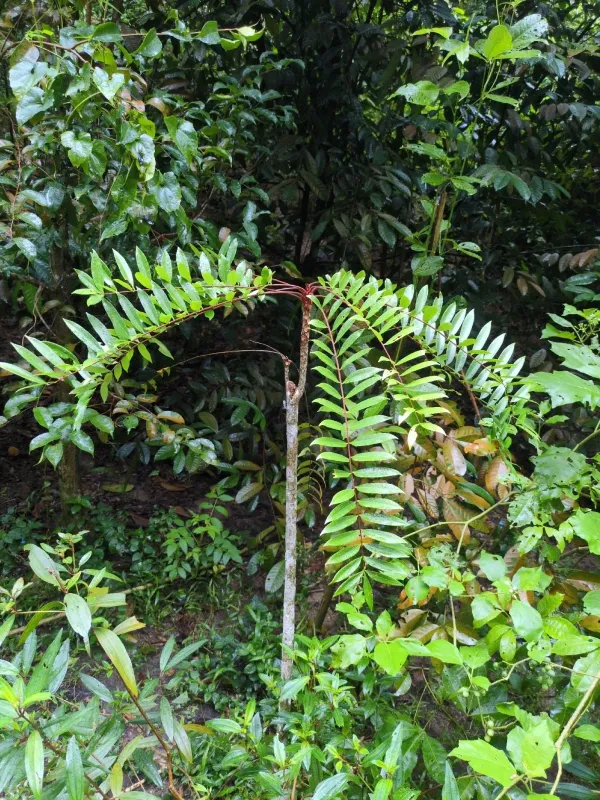
Description
Sowing dates
Eurycoma longifolia is a slow-growing evergreen shrub or small tree belonging to the Simaroubaceae family. Propagation primarily relies on seeds, which require specific conditions for germination, including high humidity and warm temperatures typical of tropical environments.
In a nursery setting, seeds should be sown in a well-draining, nutrient-rich substrate. Germination can be erratic, often requiring several weeks. Protecting the young seedlings from direct, harsh sunlight is crucial during the early stages of development to prevent leaf scorch and dehydration.
The transition from nursery to field cultivation should be handled with care. Seedlings are usually grown in containers until they reach a height of at least 40-50 cm, ensuring they have developed a sufficiently robust root system to withstand transplanting stress.
Planting schedules are typically aligned with the onset of the monsoon season in Southeast Asia to leverage natural rainfall. This helps establish the plants before the drier months, though irrigation remains necessary in many commercial setups to maintain optimal growth rates.
Due to the plant's long growth cycle, establishing a plantation is a significant commitment. Farmers often utilize agroforestry systems, planting Eurycoma under the partial canopy of larger trees to replicate its natural forest-floor habitat.
Growing requirements
This species is highly demanding in terms of environmental conditions, thriving best in humid tropical forests. It requires temperatures consistently between +25°C and +30°C and is extremely sensitive to cold, which restricts its cultivation to tropical regions.
Soil quality is paramount for successful production. Eurycoma longifolia prefers deep, acidic, well-draining soils rich in organic matter. Proper soil aeration is essential, as waterlogging is the most common cause of root death in plantation settings.
A unique requirement for this culture is the presence of specific soil fungi. These mycorrhizal associations are critical for the plant's health and nutrient uptake. In depleted soils, inoculation with beneficial microbes is often necessary to ensure normal development.
Light management plays a dual role; while juveniles require shade, mature plants can adapt to moderate, dappled sunlight. Finding the right balance between shade and light is key to maximizing root biomass without stressing the plant's metabolic processes.
Consistent high humidity, often exceeding 80%, is vital. In regions where seasonal dry spells occur, supplemental misting or drip irrigation systems must be employed to maintain the high turgor pressure necessary for plant tissue health.
Yield
The economic yield of Eurycoma longifolia is focused entirely on the roots, which contain high concentrations of bioactive compounds like eurycomanone. Harvesting is typically delayed for 5 to 10 years to allow the roots to accumulate sufficient medicinal content.
Yield estimation depends on the age of the plant and the intensity of cultivation. On average, a mature, well-tended tree can yield up to 1 kg or more of dried root material, making it a high-value but slow-turnover agricultural product.
Productivity is significantly enhanced by organic fertilization programs that prioritize soil health over synthetic boosters. Maintaining a healthy soil ecosystem ensures that the root system develops fully, directly impacting the final weight and quality of the harvest.
Commercial harvesting is a delicate process. Because the roots are often deep and irregularly shaped, labor-intensive manual excavation is preferred over heavy machinery to avoid damaging the delicate root bark where active compounds are most concentrated.
Quality control after harvesting is stringent. Only roots meeting specific size, age, and purity criteria are selected for the market, which means the marketable yield is a fraction of the total biomass produced by the plantation.
Main diseases and pests
The primary threats to Eurycoma plantations are fungal pathogens, specifically those causing root and crown rot. These diseases thrive in high-humidity tropical environments and can devastate entire crops if soil drainage is inadequate.
Nematodes are another major concern, as they parasitize the root system, stunting plant growth and making the trees highly susceptible to opportunistic bacterial or fungal infections. Effective soil management is the best defense against these pests.
Insect pests, including various leaf-chewing larvae, can impact young plantations by reducing the photosynthetic surface area. Integrated pest management (IPM) strategies are utilized to maintain control without compromising the medicinal quality of the plants.
Nutrient imbalances, particularly deficiencies in essential micronutrients, can lead to chlorosis and weakened immunity. Regular soil testing and balanced organic amendment applications are necessary to keep the plants resilient against environmental stressors.
Because of the slow growth rate, weed competition during the first three years is a significant threat. Careful weeding and the use of organic mulch around the base of the plant are essential to ensure the saplings have access to resources.
Harvesting
Harvesting Eurycoma longifolia is the most critical phase of the agricultural cycle. It involves extracting the entire root system from the ground. Workers must carefully clear the soil and use hand tools to trace the roots to their deepest points.
Post-harvest cleaning is conducted immediately using clean water to remove soil and debris. Preventing soil contamination is essential, as the roots are porous and difficult to sanitize once deep-seated dirt enters the fibrous tissue.
The roots are then cut into standardized pieces to facilitate even drying. This is done in controlled, well-ventilated drying facilities to preserve the delicate medicinal compounds, which are sensitive to excessive heat and UV radiation.
Moisture content must be reduced to approximately 10-12% for safe long-term storage. Any lingering moisture will inevitably lead to mold, which renders the entire batch of expensive raw material unusable for pharmacological purposes.
Packaging involves using moisture-proof, light-blocking materials to ensure the stability of the bioactive components during transport. Each batch is typically tested for purity and potency before it is cleared for the international supply chain.