
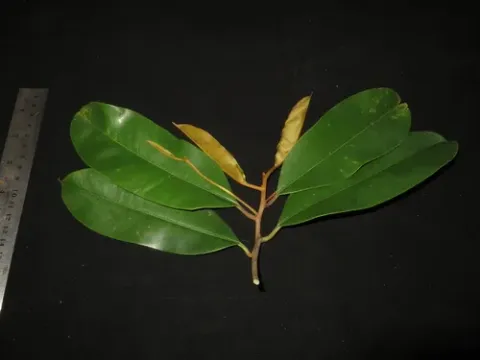
Palaquium calophyllum
Palaquium calophyllum
Palaquium calophyllum belongs to the Sapotaceae family. It is a slow-growing evergreen tree species that thrives in the tropical rainforest environments of Southeast Asia.
What the section contains
Palaquium calophyllum
The climate requirements for this culture are stringent, as it demands high ambient temperatures and consistent humidity throughout the year to maintain optimal physiological processes.
Regarding soil conditions, this plant prefers deep, well-draining soils rich in organic matter. While the tree appreciates moisture, it does not tolerate waterlogged sites where root respiration is inhibited.
In terms of agricultural management, providing a stable microclimate is crucial. Young plants often require shade to survive, mimicking the natural understory conditions of their native habitat.
The botanical structure of the species is characterized by robust, leathery foliage that helps the tree manage high transpiration rates and direct solar exposure common in its tropical range.
The primary economic significance of Palaquium calophyllum lies in its production of high-quality timber and its historically important latex, used for extracting gutta-percha.
Harvesting the latex involves careful tapping of the bark, a traditional method that requires precision to ensure the tree continues to thrive while providing a sustainable yield of raw material.
Timber harvesting is conducted on a long-rotation basis, as the species requires significant time to reach the desired density and structural integrity required for high-end commercial use.
Modern agronomic approaches emphasize sustainable forestry, ensuring that selective thinning and harvesting do not disrupt the delicate balance of the tropical forest ecosystem where these trees grow.
The versatility of the plant's products has led to its importance in various industries, ranging from specialty woodworking to the manufacturing of technical materials requiring specific physical properties.