
Tarenna alpestris
Tarenna alpestris
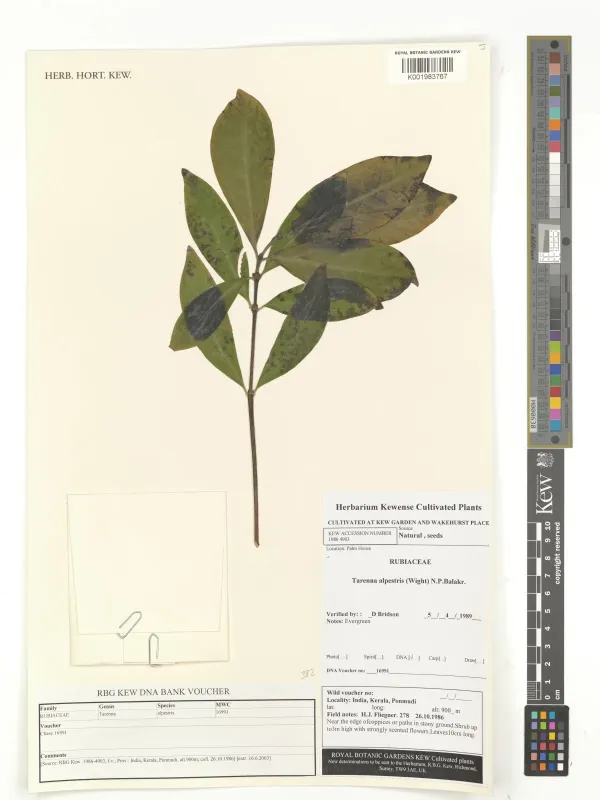
Description
Growing requirements
Tarenna alpestris is an evergreen shrub belonging to the Rubiaceae family. This species originates from the high-altitude forests of East Africa, which dictates its specific physiological requirements for growth in agricultural or nursery settings.
The cultivation of this plant requires a tropical environment with constant warmth, as the species is highly susceptible to frost damage. Commercial and decorative cultivation is primarily conducted in greenhouses where microclimate parameters can be strictly regulated.
Soil requirements focus on well-draining, nutrient-rich, and slightly acidic substrate mixes. Proper aeration of the root zone is mandatory to prevent physiological disorders and promote vigorous vegetative growth throughout the year.
Consistent moisture levels are critical for the plant, requiring a balanced irrigation schedule. In indoor settings, maintaining humidity levels is just as important as soil hydration to ensure the plant's health and aesthetic appeal of its foliage.
The plant thrives under bright, diffused light conditions. In high-intensity sun environments, artificial shading is recommended to prevent leaf scorching and to maintain the deep green pigment characteristic of the species' leaves.
Main diseases and pests
The primary pests affecting Tarenna alpestris in protected environments include spider mites and mealybugs. Integrated pest management strategies, involving biological control agents or targeted pesticides, are necessary to maintain crop health.
Root rot remains a major threat to this species, usually caused by overwatering or poor substrate drainage. Preventive measures include the use of fungicides and ensuring an adequate period of drying for the upper substrate layer between watering events.