
Tarenna fragrans
Tarenna fragrans
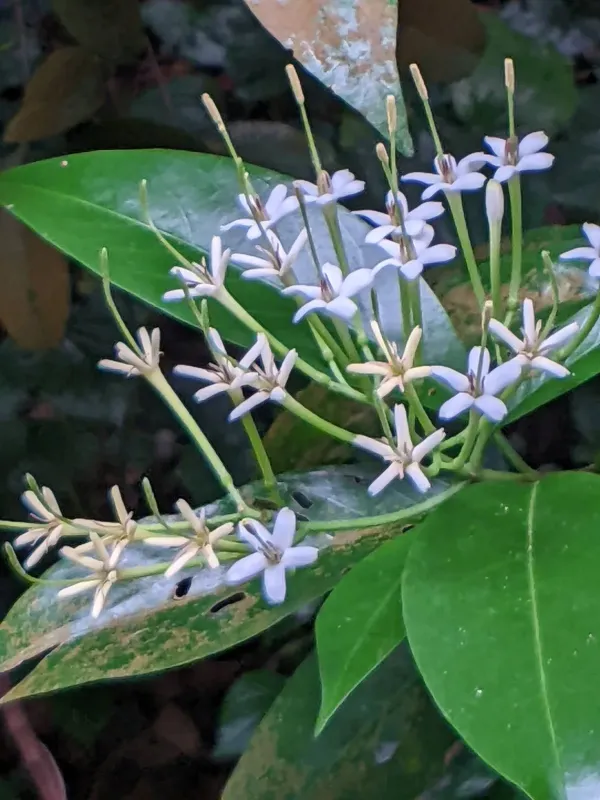
Description
Growing requirements
Tarenna fragrans is an evergreen shrub or small tree belonging to the Rubiaceae family. Native to the tropical regions of Africa, this plant thrives in humid forest understories, benefiting from the protection of larger canopy trees and high ambient humidity levels.
The plant requires a tropical climate to thrive, demanding temperatures consistently between 20°C and 28°C. It is extremely sensitive to cold snaps and frost, which can cause significant tissue damage or lead to the plant's demise if not protected during cooler months.
Soil requirements involve well-draining, nutrient-rich substrates that mimic forest floor conditions. A slightly acidic to neutral pH is preferred to ensure optimal nutrient uptake, specifically iron and manganese, which are vital for maintaining the deep green color of the foliage.
Regarding moisture, Tarenna fragrans needs consistent hydration without waterlogging the root zone. Irrigation should be adjusted based on the growth stage; increased watering is necessary during the active blooming season to support flower development and aroma production.
Economically, Tarenna fragrans is prized in tropical landscaping and greenhouse horticulture for its highly aromatic flowers. It is often cultivated as a specimen plant or used in mixed borders to provide both aesthetic beauty and a pleasant scent for garden spaces.
Main diseases and pests
Common pests affecting Tarenna fragrans include mealybugs and scale insects, which often colonize the undersides of leaves and branch junctions. These pests extract plant sap, resulting in stunted growth and the potential for secondary fungal infections.
Root rot is the most significant disease risk, usually stemming from over-irrigation or inadequate soil drainage. If the soil remains saturated for long periods, the lack of oxygen leads to root decay, which manifests as yellowing leaves and general wilting of the canopy.
Fungal leaf spot diseases can occur if the foliage remains wet for extended periods in environments with poor air circulation. These pathogens form lesions on leaves, which can lead to premature leaf drop if left untreated by appropriate systemic fungicides.
Integrated pest management is recommended, starting with cultural controls such as proper spacing to ensure adequate airflow. Regular monitoring of the foliage for signs of pests or bacterial spotting is essential for early intervention and plant health maintenance.
Nutrient deficiencies, particularly chlorosis, can be mistaken for diseases. Providing a balanced micronutrient-rich fertilizer program helps maintain plant vigor, making it more resilient to the typical pests and pathogens found in tropical nursery environments.