
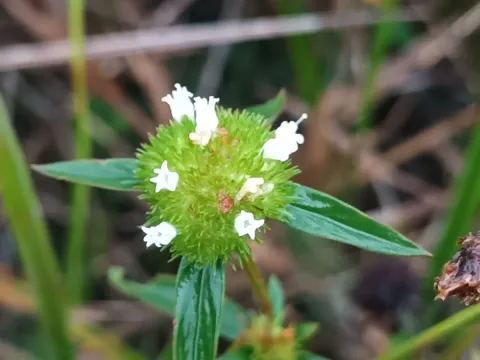
Spermacoce capitata
Spermacoce capitata
Spermacoce capitata is a herbaceous plant species belonging to the family Rubiaceae. It is native to tropical regions of the Americas and is often found in grassland environments and disturbed sites.
What the section contains
Spermacoce capitata
The sowing process typically aligns with the onset of the rainy season, as consistent moisture is critical for the germination of its seeds. The seeds are small and require light coverage to ensure optimal soil contact.
The plant exhibits rapid establishment, allowing it to quickly colonize open ground. When used as a forage crop, density must be carefully calculated to ensure a uniform distribution of vegetative biomass.
Biological characteristics include a robust root system that aids in soil stabilization. This feature makes it highly useful for preventing soil erosion in tropical agricultural landscapes.
Propagation is primarily through seeds, though the plant can show some regenerative capacity. Proper seed storage is essential to maintain high viability for the next planting season.
Spermacoce capitata thrives in well-drained soils and shows a preference for acidic to neutral soil types. It is highly efficient at extracting nutrients, often growing in poor-quality soils where other crops struggle.
Sunlight exposure is a primary requirement; the plant is strictly heliotropic and grows best in full sun. Shade reduces photosynthetic efficiency and significantly decreases total dry matter production.
Climate needs are strictly tropical. The plant is extremely sensitive to cold and frost, which can cause total failure of the crop. Constant high temperatures are necessary for year-round development.
Water management is essential during the establishment phase. While the plant possesses moderate drought tolerance once mature, supplemental irrigation can be beneficial during prolonged dry spells.
Agrotechnical practices involve manual or mechanical weed control during the seedling stage. Once the plants reach the canopy closure stage, their growth habit is sufficient to outcompete most common weeds.
The plant is generally resilient, but excessive soil moisture can trigger fungal infections, particularly root rot. Proper site selection for drainage is the most effective preventative measure against these issues.
Insect pests such as leaf-eating caterpillars and aphids can cause damage to the foliage. Monitoring programs are recommended to detect infestations before they reach economic threshold levels.
Foliar diseases, including various types of leaf spot, can occur under humid, stagnant conditions. Improving airflow through appropriate planting spacing is a standard strategy to mitigate these risks.
Integrated Pest Management (IPM) is encouraged for Spermacoce capitata. This approach focuses on biological control and environmental management to maintain plant health without excessive chemical reliance.
Strict hygiene in field preparation and the use of healthy, treated seeds are vital components in managing the risk of soil-borne pathogens and ensuring long-term field productivity.