
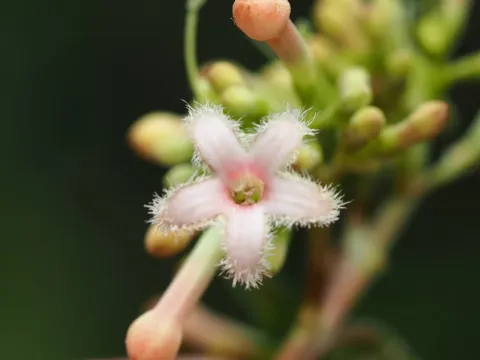
Cinchona
Cinchona
Cinchona propagation is typically achieved through seeds in specialized nurseries or greenhouses. The seeds are extremely small, requiring surface sowing with high humidity and stable temperatures ranging between 20 and 25 degrees Celsius.
What the section contains


Cinchona
Germination is often slow, necessitating meticulous substrate management to prevent root rot. Young seedlings are highly sensitive to direct sunlight, requiring a gradual hardening process before they can be transplanted into outdoor environments.
Transplanting to the field is performed once seedlings reach a height of 30 to 50 centimeters, usually at the onset of the rainy season. Optimal planting density is calculated based on the specific species and the intended management regime for the plantation.
Proper site preparation, including the incorporation of organic fertilizers, is critical for stimulating root development during the early stages of establishment. Quality maintenance during the first two years of growth significantly dictates long-term tree productivity.
Industrial operations utilize both pure stands and intercropping systems, where taller plants provide necessary shade for younger Cinchona trees. Modern nursery techniques also incorporate vegetative propagation via cuttings to maintain desirable genetic traits.
Belonging to the Rubiaceae family, Cinchona is native to the Andean mountain cloud forests. The crop has strict climatic requirements, thriving in high-altitude regions characterized by consistent rainfall and mild temperature fluctuations.
An ideal temperature range of 15–25 degrees Celsius is necessary, as the tree is intolerant to severe frost and extreme heat. High atmospheric humidity is an essential condition for proper leaf development and overall physiological health.
Soils must be deep, fertile, well-draining, and slightly acidic. Waterlogging is lethal to the crop, which is why plantations are frequently established on mountain slopes where natural water runoff is facilitated by the topography.
While the plant is light-demanding, juvenile trees require shade to simulate the natural forest canopy. The optimal elevation for Cinchona cultivation ranges from 1,000 to 3,000 meters above sea level, depending on the species' specific ecological niche.
Systematic plantation management includes weeding, soil aeration, and the application of balanced mineral fertilizers. Adhering to these agronomic requirements is essential for producing bark with high alkaloid concentrations.
The primary economic product of the Cinchona tree is its bark, which contains over 20 alkaloids, most notably quinine, quinidine, cinchonine, and cinchonidine. Harvesting this bark is a labor-intensive process requiring technical expertise.
The first commercial bark harvest typically occurs 7 to 10 years after planting. Yield quality is directly correlated with tree age and the environmental conditions that influence the plant's metabolic pathways for alkaloid synthesis.
Standard harvesting often involves clear-felling, followed by processing the bark from both the trunk and roots. While some modern methods explore non-destructive harvesting, these techniques often lead to lower alkaloid concentrations in subsequent years.
After clear-felling, plantation sites require extensive restoration as the crop can significantly deplete soil nutrients. The economic viability of Cinchona farming is heavily dependent on global market prices for quinine, which remains a pharmaceutical necessity.
Average dry bark yields per hectare vary based on planting density and the intensity of cultural practices. The development of high-yielding cultivars has significantly improved alkaloid output per ton of harvested raw material.
Fungal diseases, which thrive in high-humidity environments, represent the primary threat to Cinchona plantations. Root rot is particularly destructive, capable of wiping out large areas of young plantations if drainage is inadequate.
Leaf spot diseases caused by various pathogens can lead to premature defoliation and stunted tree growth. Mitigation requires the application of systemic fungicides and the strict implementation of phytosanitary protocols to prevent outbreaks.
Insect pests, including various larvae, pose significant threats by attacking young shoots and the bark of mature trees. Regular monitoring is essential for the early detection of infestation sites to prevent widespread damage.
Sap-sucking pests may also act as vectors for viral diseases, which remain poorly understood and extremely difficult to treat. Integrated pest management, combining biological and chemical control methods, is the most effective approach.
Selecting resistant cultivars and maintaining proper stand thinning are the best strategies for preventing major disease outbreaks. Proactive management is significantly more effective than attempting to treat already infected trees.
Harvesting is conducted during periods of peak alkaloid concentration, which is confirmed through laboratory analysis of bark samples. This timing usually coincides with the end of the plant's active sap flow season.
Bark is carefully stripped from trunks and large branches using specialized tools, ensuring minimal damage to the wood where sustainable harvest techniques are employed. Collected material must be dried immediately to prevent fermentation.
Drying is performed under shelters or in specialized mechanical dryers under controlled temperatures. Proper drying is vital to maintain chemical integrity and prevent the development of mold, which degrades the product quality.
Once dried, the bark is sorted by thickness and alkaloid content, baled, and shipped to processing facilities for extraction. The extraction process requires high-tech equipment to isolate pure quinine from the raw vegetable matter.
Production byproducts containing residual alkaloids are sometimes repurposed for secondary industrial uses, maximizing the total utility of the harvested material. Efficient logistics are key to minimizing loss during transport and processing.