
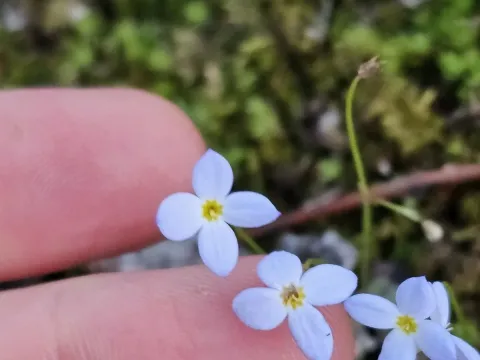
Azure bluet
Houstonia caerulea
Houstonia caerulea, a member of the Rubiaceae family, is a delicate perennial wildflower that thrives best when its natural growing cycle is mimicked during propagation.
What the section contains
Azure bluet
Seeds require a period of cold stratification for successful germination. Sowing in late autumn or early spring is recommended to ensure the seeds experience the necessary dormancy break.
When starting indoors, use a fine, well-draining potting mix and press the seeds into the surface without covering them completely, as they need light to germinate properly.
Maintain consistent humidity using a misting system or a cover to prevent the surface from drying out until the seedlings emerge, which typically takes two to four weeks.
Once established, the plants can be divided every few years to invigorate growth and increase the population in the garden area.
Native to eastern North America, the Azure bluet prefers cool, moist environments such as open woods, meadows, and rocky slopes where moisture is abundant.
The soil must be acidic to neutral, rich in organic matter, and possess excellent drainage capabilities to prevent root rot in wetter seasons.
Partial shade is ideal for this species. While it tolerates some sun, excessive heat and direct sunlight can lead to rapid wilting and shortened flowering duration.
Climate-wise, it performs best in regions with cool summers. In hot climates, it is essential to provide protection from the afternoon sun and ensure higher humidity levels.
Fertilization should be handled with caution; organic compost applied in the spring is usually sufficient to support healthy leaf development and bloom production.
The primary threats to Houstonia caerulea in managed landscapes include fungal leaf spots, often exacerbated by poor air circulation and excessive overhead irrigation.
Root pathogens are a common issue in poorly draining soils, leading to a sudden decline in plant vigor and eventual mortality of the clump.
Slugs and snails are notorious for feeding on the low-growing foliage, necessitating the use of mechanical barriers or ecological pest management strategies.
Aphid infestations may occur on the tender stems during the spring, which can be managed with gentle horticultural soaps if the population threshold is exceeded.
Maintaining a clean garden environment and preventing overcrowding are the most effective ways to reduce the pressure from both pests and diseases.