
Bengal coffee
Coffea benghalensis
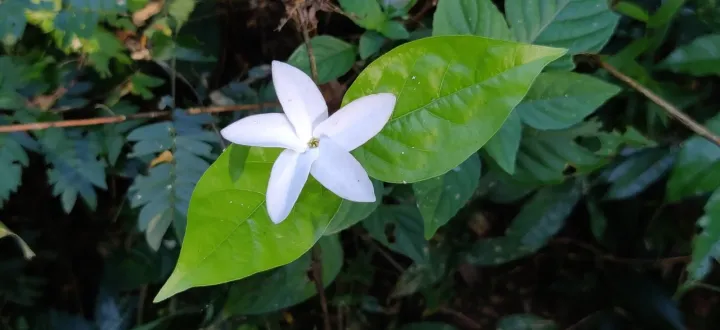
Description
Growing requirements
Bengal coffee (Coffea benghalensis) is a perennial evergreen shrub or small tree belonging to the Rubiaceae family. Native to the tropical regions of South Asia, specifically India and Bangladesh, this plant thrives in humid forest understories. It is closely related to the commercially valuable coffee species but is primarily recognized for its botanical interest.
Botanically, Coffea benghalensis is distinguished by its leathery leaves and characteristic white flowers that appear in clusters. It typically grows as an understory plant, meaning it has evolved to tolerate low-light conditions. When cultivated, it requires protection from harsh, direct sunlight to prevent leaf scorching and to maintain optimal health.
The cultivation requirements are centered around a consistent, warm, and humid environment. The soil should be well-draining, nutrient-rich, and slightly acidic. It is imperative to avoid waterlogging the soil, as the root system is sensitive to prolonged dampness, which can easily trigger fungal infections and root rot.
Optimal temperature ranges for growth fall between 22 and 28 degrees Celsius. The species does not tolerate sudden temperature fluctuations or cold drafts. In temperate climates, this plant is strictly suitable for greenhouses or indoor environments where humidity levels can be maintained consistently above 70%.
While not a primary source for commercial coffee production, this species serves as a vital component in genetic research. Its resilience and specific adaptive traits make it a subject of interest for breeding programs aiming to develop more robust coffee varieties capable of surviving changing environmental conditions.
Main diseases and pests
Common pests that plague Coffea benghalensis include spider mites and mealybugs. These insects often thrive in indoor environments where air circulation is poor. They feed on the sap of tender leaves and shoots, causing visible yellowing, stunting, and the eventual drop of foliage if left untreated.
Fungal diseases are a significant risk, particularly those affecting the root system and foliage. Root rot, caused by overwatering and poor drainage, is the most common cause of plant failure. It presents as a darkening of the stem base and drooping leaves, despite the soil being moist, signaling a compromised vascular system.
Leaf spot diseases, often caused by various pathogens, can occur if the leaves remain wet for extended periods without adequate air movement. Improving air circulation around the canopy is a standard and highly effective preventative measure to minimize the spread of moisture-loving spores and pathogens.
Management of these threats involves a combination of mechanical removal of pests, environmental control, and the use of targeted biological controls or fungicides. Regular monitoring of the underside of leaves and the stem base is essential for early detection, which significantly increases the chances of successful recovery.
Maintaining a balanced nutritional regime is also crucial for plant health. Providing proper nitrogen, phosphorus, and potassium levels helps the plant develop a natural resistance to diseases. A well-nourished plant is more capable of healing from minor infestations compared to a plant weakened by nutrient deficiencies.