
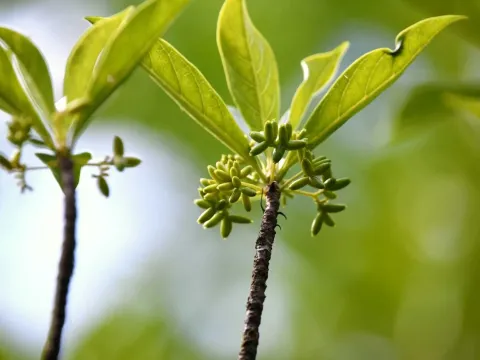
Antirhea
Antirhea
Antirhea is a genus of evergreen trees and shrubs belonging to the Rubiaceae family. These plants are well-adapted to warm, humid environments, making them characteristic components of tropical forest ecosystems.
What the section contains

Antirhea
The native distribution of Antirhea spans across tropical regions in Asia, the Caribbean, and Pacific islands. They thrive in environments where temperature fluctuations are minimal and precipitation remains consistently high throughout the year.
The ideal soil conditions for Antirhea involve well-drained, nutrient-rich substrates. They do not tolerate waterlogged conditions, which can lead to root asphyxiation and subsequently cause the death of the specimen.
Regarding light, these plants prefer filtered or indirect sunlight. When grown in artificial environments or conservatories, maintaining proper light intensity is essential to prevent leaf scorching while ensuring healthy photosynthetic activity.
Agricultural management requires careful irrigation and the occasional application of balanced fertilizers. Maintaining soil moisture through organic mulching is also a recommended practice to stabilize root temperature and prevent excessive evaporation.
The primary economic value of Antirhea is derived from its timber. The wood is known for being dense, durable, and naturally resistant to rot, making it a sought-after material for specialized construction and carpentry.
In ornamental horticulture, Antirhea is appreciated for its dense, glossy foliage and architectural form. While not a commercial crop for mass market, it is highly valued in botanical gardens and upscale landscaping in tropical zones.
Some species of Antirhea have historical significance in local ethnobotany. Investigations into their chemical compounds are ongoing, particularly focusing on potential applications in the pharmaceutical industry due to the presence of secondary metabolites.
The yield of biomass depends significantly on the site conditions and the silvicultural methods employed. Sustainable management allows for a continuous supply of wood resources without degrading the forest ecosystem.
Productivity is also tied to the tree’s overall health. Ensuring the trees have adequate space and access to nutrients is crucial for maximizing wood density and maintaining the structural integrity of the timber.
The most significant threats to Antirhea include fungal pathogens that exploit poor soil drainage. Root rot is a common issue when irrigation schedules do not account for the current moisture retention capacity of the soil.
Pests such as scale insects and mealybugs can cause considerable damage by infesting leaves and stems. These insects extract sap, which weakens the plant and leaves it susceptible to secondary viral or bacterial infections.
Phytophthora is another concern in humid climates. It requires strict sanitation protocols, such as removing affected plant material immediately and improving ventilation to prevent the spores from spreading to healthy trees.
Competition from invasive plant species can hinder the establishment of young Antirhea trees. Regular weeding and maintaining a clear perimeter around the base of the trunk are essential for the initial years of growth.
Integrated pest management (IPM) is the most effective approach for maintaining healthy stands. By monitoring for signs of stress and using biological controls where possible, growers can maintain the health of the population effectively.