
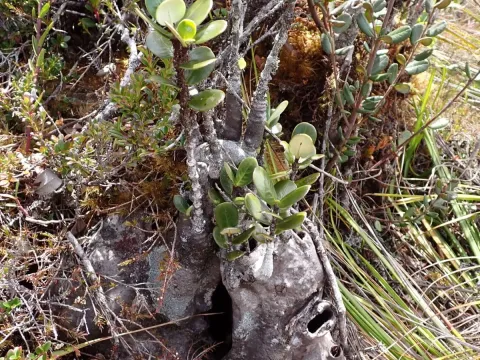
Hydnophytum
Hydnophytum
Propagation of Hydnophytum is primarily achieved through seeds, as the plant does not produce offsets suitable for cloning. Seeds must be sown fresh, as they lose viability rapidly once removed from the fruit.
What the section contains


Hydnophytum
The ideal substrate for sowing consists of a light, aerated mix of tree fern fiber, long-fiber sphagnum moss, and perlite. This medium ensures the delicate roots do not suffer from suffocating moisture.
Maintain a constant temperature between 25 and 28 degrees Celsius for successful germination. Use a clear lid or a humidity dome to keep the environment consistently humid during the early stages.
Seedlings remain in the juvenile stage for several months, showing very slow development. Do not rush to repot them until they have developed a noticeable swollen base, indicating a strong root system.
Light levels for seedlings should be soft and filtered. Gradually introduce them to higher light intensities only once the caudex begins to harden and increase in size.
Hydnophytum, a member of the Rubiaceae family, is a fascinating group of epiphytic ant-plants native to the tropical forests of Southeast Asia. Its most defining characteristic is the swollen, hollow caudex.
These plants evolved to provide housing for ant colonies in exchange for nutrients and protection. In cultivation, they require a setup that simulates this humid, tree-top environment.
High humidity is essential for the health of Hydnophytum. If grown in standard home conditions, they often benefit from being kept in a terrarium or a specialized greenhouse environment.
The substrate must be extremely well-draining, similar to those used for orchids. Regular watering is necessary, but the medium should be allowed to dry slightly between sessions to prevent root rot.
Bright, indirect light is required for the plant to thrive. Direct sunlight will easily scorch the succulent tissues of the caudex and damage the leaves, causing them to drop prematurely.
Root rot is the most common cause of failure in Hydnophytum cultivation. This is usually triggered by poor drainage or keeping the substrate saturated for long periods without adequate airflow.
Mealybugs are frequent pests that infest the hidden crevices within the caudex. Because of the plant's structural complexity, these pests can be difficult to eliminate entirely once an infestation takes hold.
Fungal infections can spread rapidly in high-humidity environments with stagnant air. Using a small fan to promote gentle air circulation is a standard practice for experienced growers.
Water quality is critical; the use of tap water containing high mineral content can lead to salt buildup in the substrate. This buildup often causes the tips of the leaves to brown and the overall growth to stall.
Always inspect new additions to your collection carefully, as pests are easily introduced through shared containers or contaminated substrates. Quarantine is recommended for all new specimens.