
Hoffmannia ghiesbreghtii
Hoffmannia ghiesbreghtii
Description
Growing requirements
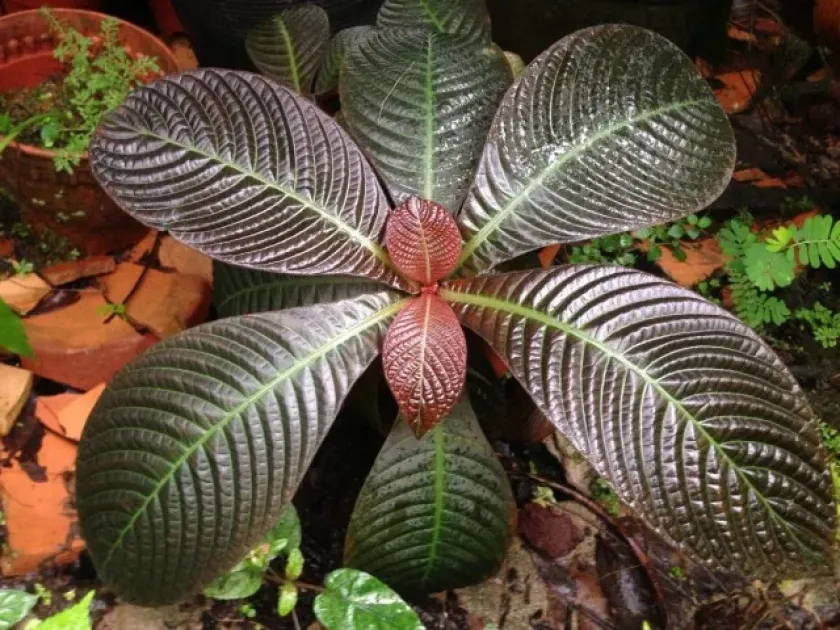
Hoffmannia ghiesbreghtii is a striking perennial plant belonging to the Rubiaceae family. Originating from the tropical forests of Mexico and Central America, this plant is highly prized for its textured, large leaves.
The plant requires bright, filtered light to maintain its vibrant foliage color. Exposure to direct sunlight should be avoided, as it can cause significant leaf scorch and damage to the plant's delicate surface.
Climate requirements include stable temperatures ranging from 20°C to 25°C. Exposure to cold drafts or temperatures below 16°C can trigger dormancy or result in severe physiological damage to the stems.
The soil should be well-draining, fertile, and slightly acidic. A mix consisting of peat moss, leaf mold, and perlite is ideal to ensure sufficient aeration while maintaining necessary moisture levels for the roots.
High humidity levels are essential for the healthy development of Hoffmannia ghiesbreghtii. Growers should utilize humidifiers or mist the foliage frequently, especially in indoor environments where ambient air can be dry.
Main diseases and pests
The most common pests affecting this culture include spider mites and mealybugs, which thrive in low-humidity environments. These pests can rapidly colonize the undersides of the leaves if left unchecked.
Root rot is a major threat, usually resulting from overwatering or inadequate soil drainage. This fungal issue causes the foliage to wilt and eventually leads to total plant collapse if not corrected.
To prevent these threats, consistent monitoring of the substrate moisture is critical. Allowing the top layer of the soil to dry slightly between waterings helps manage fungal populations.
Integrated pest management strategies involve regular inspection of the leaves and the application of insecticidal soaps or horticultural oils if early signs of infestation are identified.
Cultural control, such as maintaining cleanliness around the plants and ensuring good air circulation, significantly reduces the susceptibility of Hoffmannia ghiesbreghtii to various pathogenic fungi and pests.