
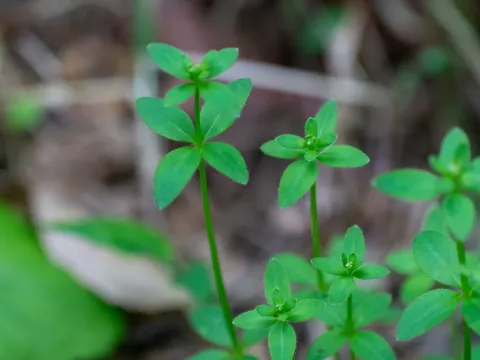
Rough-seeded bedstraw
Galium trachyspermum
Rough-seeded bedstraw (Galium trachyspermum) is a member of the Rubiaceae family. This herbaceous plant is recognized in botanical studies for its specific morphology and its role within various European and Asian plant communities.
What the section contains
Rough-seeded bedstraw
The plant originates from the temperate regions of Eurasia. It demonstrates significant adaptability to different environments, thriving in well-lit areas with moderate soil moisture, often colonizing agricultural lands and meadows.
Botanically, it is identified by its square-shaped stems and whorled leaves. The term "trachyspermum" refers to its distinct seed structure, which is covered in minute protuberances or roughness, a key feature for identifying the species during field surveys.
Environmental requirements for the species include moderate resilience to temperature fluctuations. It possesses a competitive growth habit, which allows it to persist under varying light and moisture conditions across diverse geographical zones.
In terms of agricultural significance, rough-seeded bedstraw is typically managed as a secondary weed. While it does not serve as a primary crop, understanding its life cycle is essential for farmers seeking to maintain high crop yields and soil quality.
Common diseases affecting this species include rust fungi, which target the foliage and can lead to significant physiological stress during damp and humid summer conditions.
Pests such as various types of weevils and aphids are known to utilize bedstraw species as host plants, potentially impacting the overall health and density of a population in wild areas.
Mechanical weed control, including spring harrowing and inter-row cultivation, remains the most effective method for suppressing its expansion within standard crop rotations.
Chemical control programs involving post-emergence herbicides are often employed to mitigate the spread of Galium species in fields where they threaten to shade out young crops.
Comprehensive field management strategies are crucial, as the seeds of this plant are capable of maintaining high germination rates even after several years of dormancy in the soil profile.