
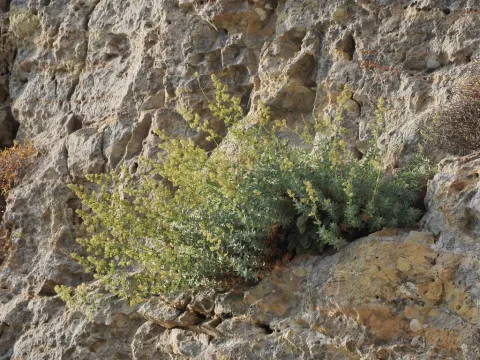
Reiser's bedstraw
Galium reiseri
Reiser's bedstraw (Galium reiseri) is a perennial herbaceous plant belonging to the Rubiaceae family. As a niche species with specific environmental demands, it is not widely cultivated as a commercial crop but holds interest for specialized herbal production and botanical gardens.
What the section contains
Reiser's bedstraw
The plant originates from the Balkan mountainous regions, where it primarily grows in limestone soils and rocky outcrops. It requires a well-drained substrate, as moisture accumulation around the root collar can lead to rapid physiological decline and plant death.
This species thrives in high-light conditions, preferring slopes or fields with full solar exposure. It is highly adapted to temperate climates, successfully enduring the temperature drops characteristic of mountainous altitudes throughout its growing season.
Botanically, Reiser's bedstraw is distinguished by its whorled narrow leaves and fine, delicate stems. It requires a neutral to slightly alkaline soil pH, which mimics its native substrate conditions. High nitrogen levels are detrimental to its structural integrity and chemical profile.
Field management requires careful weeding during the early establishment phase, as the plant is sensitive to competition from aggressive weeds. Once established, it develops a reliable root system that can withstand variable moisture levels, provided the soil remains aerated.
The primary threats to this culture are fungal diseases, particularly those triggered by poor ventilation and high humidity. Powdery mildew and root rot represent significant risks to the uniformity and yield of the crop plantation.
Insect pests such as aphids and leaf-eating beetles often target the tender shoots during the spring season. These pests not only physically damage the plant but can also serve as vectors for various systemic plant diseases.
Integrated Pest Management (IPM) is essential for maintaining the health of Galium reiseri. Biological control agents, including parasitic wasps or predatory mites, should be encouraged to suppress pest populations without chemical interference.
Maintaining clear rows and ensuring adequate spacing between plants is a fundamental practice for disease prevention. Reducing canopy humidity through optimized planting density remains the most effective way to avoid fungal outbreaks.
Regular inspection of the root zone and leaf undersides is recommended for early detection of stress. Prompt removal of infected plant tissue is critical to contain pathogens and ensure the long-term viability of the agricultural plot.