
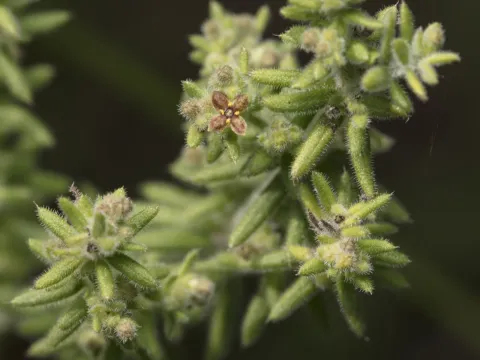
Sea bedstraw
Galium maritimum
Sea bedstraw (Galium maritimum) is a herbaceous plant belonging to the Rubiaceae family. While not a conventional commodity crop, it is recognized for its potential as a specialized medicinal and botanical resource in coastal and Mediterranean agricultural systems.
What the section contains
Sea bedstraw
Botanically, the plant is characterized by its whorled leaves and branching stems, which provide a high surface area for photosynthesis in environments with varying light conditions. The plant is a perennial, establishing a deep and resilient root system over time.
Its natural habitat includes coastal zones where it thrives in sandy or rocky soils. This adaptation makes it a candidate for soil stabilization projects, where it helps prevent erosion in sensitive ecosystems through its dense root network.
Cultivation for commercial purposes involves harvesting the aerial parts of the plant, which contain valuable phytochemicals. The plant follows a growth cycle synchronized with the Mediterranean climate, favoring mild temperatures and high solar exposure.
The agronomic focus is on optimizing biomass production while maintaining the specific concentrations of secondary metabolites required for pharmaceutical applications. Sustainable harvesting practices are essential for preserving the viability of the stands.
Sea bedstraw requires well-drained, sandy, or gravelly substrates to prevent moisture accumulation. Any tendency toward waterlogging will inevitably lead to root health decline and plant mortality, necessitating careful site selection.
The species is highly heliophilic, meaning it demands full sun exposure to flourish. Reduced light levels result in stunted growth and diminished concentrations of bioactive compounds, affecting the final quality of the harvest.
Environmental conditions should mimic its natural coastal surroundings, favoring moderate humidity and good airflow. Excessive atmospheric stagnation can predispose the crop to fungal infections, especially in humid maritime regions.
Fertilization regimes should be conservative, prioritizing potassium and phosphorus over nitrogen to ensure robust tissue development rather than excessive foliage growth. Precise nutrient management is key to maintaining the plant's health.
Irrigation must be precise and tailored to the plant's growth stage. While the species is drought-tolerant, supplemental water during peak growth periods significantly improves biomass yields without compromising the plant's hardiness.
Fungal diseases are the primary concern for sea bedstraw, with powdery mildew being common under conditions of high humidity and poor ventilation. Maintaining open planting schemes is the best cultural control strategy.
Root rot pathogens represent a severe threat in non-draining soils. Farmers must ensure proper soil structure and avoid over-irrigation to mitigate the risk of pathogen outbreaks in the rhizosphere.
Pest pressure from aphids is a recurring issue, particularly during the early vegetative phase. These insects can reduce plant vigor; thus, early detection and biological control measures are highly recommended.
Weed competition is particularly critical during the establishment phase, as the plant is slow to form a dense canopy. Implementing manual or mechanical weeding is necessary until the crop becomes established and self-sufficient.
Nematodes may cause damage when the crop is grown in the same sandy soil over consecutive years. Rotating fields and using certified disease-free seedlings are essential practices for successful long-term cultivation.